
The lowest asking price doesn’t always make the best equipment purchase. A heavy lift equipment acquisition consultant helps you define the lifting task, compare suitable machinery, and assess the purchase before you commit. The right choice depends on how the equipment will be used, its condition and capabilities, and how it fits your operation.
It’s understandable to focus on the purchase price, especially when a major equipment decision affects both budgets and day-to-day work. But a careful evaluation can also bring costs, equipment suitability, deal terms, timing, and financing choices into view before you buy. This article explains what acquisition support can cover, how to assess equipment and structure a deal, and which factors influence when and how to proceed. You’ll also see when specialist advice can help you make a more informed decision.
Key Takeaways
- Compare equipment against the actual lifting task, operating conditions, and capacity needs before weighing purchase options.
- Look beyond the asking price by considering how equipment suitability and planning can affect downtime and operational costs.
- Understand how outright purchases, partial-stake sales, and seller involvement can shape a transaction’s terms and control.
- Use project requirements and funding timelines to guide when to proceed and which financing approach to consider.
- For heavy-lifting equipment needs, explore options such as Kalmar Heavy Lift Trucks and compare them with other suitable equipment categories.
Efficiency and cost savings
A heavy-lift purchase affects more than the acquisition budget. Equipment that cannot handle the load, reach, or site conditions can delay work and require costly workarounds. A heavy lift equipment acquisition consultant connects the planned task with suitable machinery before you commit. That starts with defining the lift, comparing equipment capabilities, and considering how the machine will operate at your site.
Consulting fees depend on the assignment and are provided after a quote request. The scope, equipment complexity, depth of evaluation, and level of transaction support all affect the fee. A focused equipment assessment differs from support that also covers lift planning, logistics, and execution. Define the decisions you need help with so the proposed work matches your project.
To see how consultation can shape an equipment purchase, watch this overview of the quoting process:
Start with the load and work area. Record the load’s weight and dimensions, required lifting height, travel path, ground conditions, and access constraints. At a manufacturing site, for example, a machine may need to pass through a narrow aisle before reaching its installation point. Matching capacity alone does not account for access.
Next, compare suitable equipment against the full operating task. An advisor can review the options and flag a mismatch before it causes delays. A unit without the necessary reach or maneuverability may force the team to revise the lift or arrange additional equipment. Selecting machinery that fits the task helps avoid these disruptions.
Lift planning can also support productivity. Consultants can prepare plans to reduce downtime, coordinate the work sequence, and clarify equipment needs. For a shipping or construction project, planning can align machinery movement with site access and the work schedule. A clear sequence helps teams avoid waiting while equipment or resources are repositioned.
Unexpected lifting problems can disrupt an otherwise workable plan. A consultant can assess the issue, identify practical adjustments, and help prevent delays or improvised workarounds. That support is especially relevant when site conditions differ from the initial assumptions, such as an obstructed route or a changed load position. Reassessing the task helps keep the equipment choice and plan aligned.
To evaluate potential efficiency gains, compare the planned approach with the current alternative. Identify where unsuitable equipment could cause waiting, extra handling, or a revised lift sequence. Then assess whether a better equipment choice or plan would address those bottlenecks. This gives buyers a practical basis for judging value without treating the lowest purchase price as the only measure.
Consultants can prepare lift plans to reduce downtime and support productivity, identify suitable equipment to help avoid delays, and address unexpected lifting problems that could lead to workarounds.
Heavy equipment evaluation
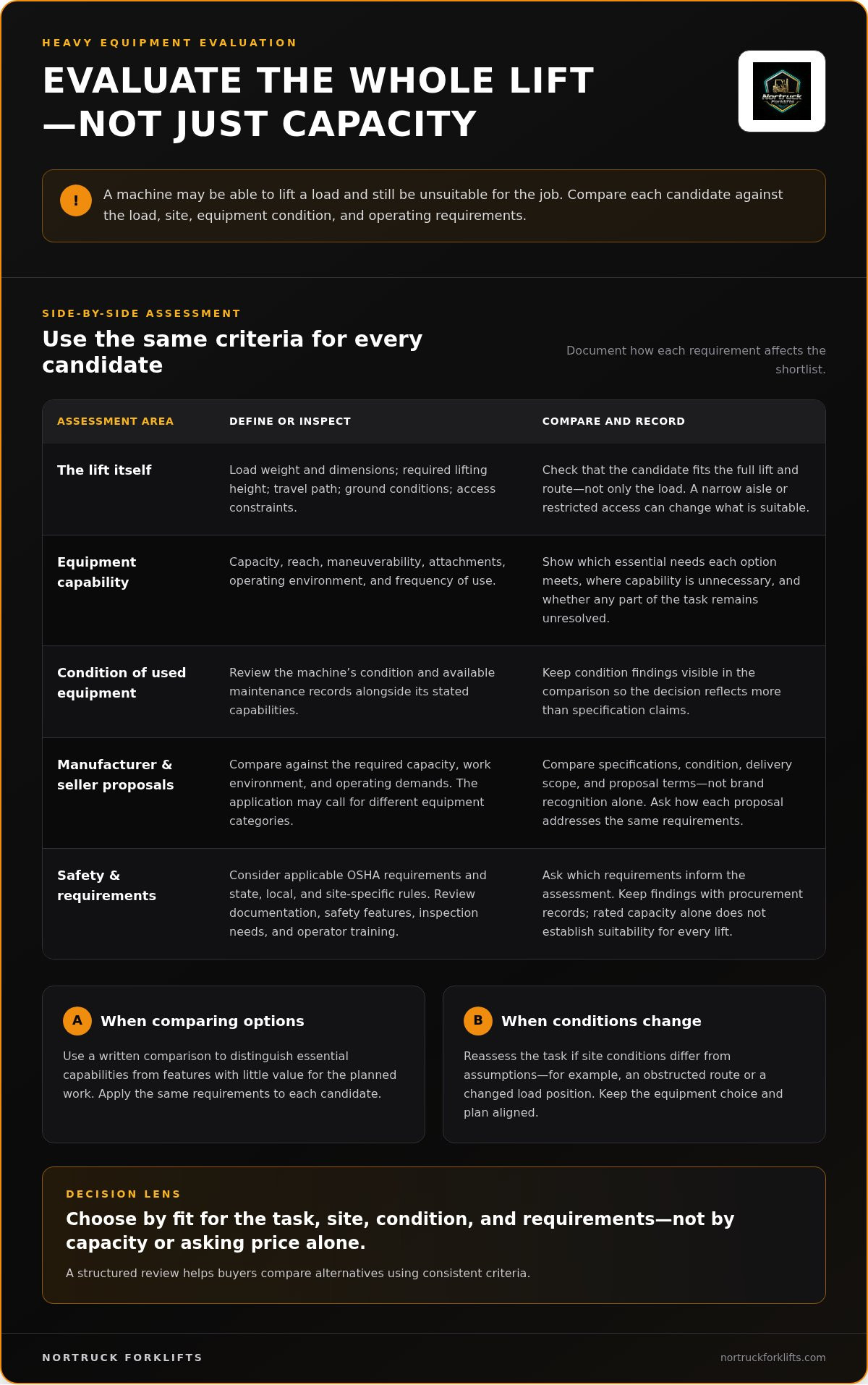
Evaluate each candidate against the work it must perform, its condition, and the site where it will operate. A structured review helps you compare alternatives using consistent criteria.
Equipment evaluation criteria
Begin with the load, lifting height, operating environment, and frequency of use. Then assess capacity, reach, maneuverability, attachments, and access against the actual task. Equipment that can lift a load may still be unsuitable if it cannot turn within the facility’s aisles. For used machinery, review its condition and available maintenance records alongside its stated capabilities.
Ask the evaluator to document how each requirement affects the shortlist. A written comparison helps distinguish essential capabilities from features with little value for the planned work. It also gives procurement teams a consistent basis for comparing specifications and proposals.
Manufacturer and dealer comparisons
Compare equipment from manufacturers and sellers against the required capacity, work environment, and operating demands. The right candidates depend on the application: a port terminal, warehouse, and construction site may each call for a different equipment category. Compare specifications, condition, delivery scope, and proposal terms rather than relying on brand recognition alone.
Ask how each candidate addresses the same requirements and where its proposal differs. A side-by-side matrix can show which option meets essential needs, which includes unnecessary capability, and which leaves a task unresolved. If your requirements point toward heavy-duty lifting machinery, review heavy lifting equipment options as part of that comparison.
Safety and regulatory requirements
In the United States, a purchase assessment should consider applicable OSHA requirements alongside state, local, and site-specific rules. Relevant obligations depend on the equipment, work activity, and workplace. The evaluation should consider how the selected machinery fits the planned operation, including its operating documentation, safety features, inspection needs, and operator training.
Ask the consultant to explain which requirements inform the assessment and how they affect equipment selection. A machine’s rated capacity alone does not establish suitability for every lift; the load, setup, surroundings, and operating procedure also matter. Keep the findings with procurement records so the decision reflects the project’s safety needs.
What qualifications and experience should an acquisition consultant have? Look for experience related to lifting, rigging, heavy lifting, construction, or installation, plus knowledge of specialized equipment and complex lifting techniques. For major industrial roles, relevant profiles may call for 10-15 years of experience.
What should you ask before hiring a consultant? Ask how they assess equipment condition, compare proposals, document recommendations, and account for your site and lifting requirements. Clarify the assignment’s scope and deliverables, and how they address a mismatch between a proposal and the actual task.
Sale methods and deal structure
Choose whether to buy, lease, or rent based on expected use, ownership needs, and the project timeline. Compare the full commitment, equipment access, and how each option fits your operating plans.
Buying, leasing, or renting
Buying can suit equipment needed for ongoing work and consistent availability. Assess the purchase against expected use, storage, upkeep, and how long you plan to keep the machine. A buyer needing a heavy lift truck for regular operations may value ownership more than temporary access.
Leasing can provide access under an agreement without an outright purchase. Review the payment structure, term, permitted use, and end-of-agreement conditions. Renting may suit a defined project with a clear end point, but compare the rental period and access terms with the work schedule. These are general decision paths, not services offered by every seller.
Compare the options using the same assumptions. List the project duration, frequency of use, required equipment, and expected downtime. Then consider how each choice affects operational flexibility and control. A short, defined assignment and recurring facility work can lead to different decisions, even when both require similar lifting capacity.
Acquisition process steps
Begin by documenting the task, load, site conditions, and operational requirements. Use that information to define the equipment category and key capabilities. For example, note whether the machine must maneuver in a warehouse or handle loads in a port setting. Clear requirements reduce the risk of comparing unsuitable proposals.
Next, shortlist equipment and assess each proposal against the same criteria. Review condition, specifications, included items, delivery arrangements, and stated commercial terms. For used equipment, examine available condition and maintenance records. Record unanswered questions in the comparison so decision-makers can resolve them before choosing a candidate.
Once a preferred option emerges, review the transaction documents carefully. Confirm the equipment description, purchase terms, payment milestones, delivery responsibilities, and any agreed acceptance process. Keep written records of changes made during negotiation. If the seller’s proposal includes equipment preparation or delivery, make those responsibilities clear in the agreement.
Before committing, align the transaction with internal approvals and the planned operating schedule. Assign responsibility for each action, from document review to site readiness. A procurement team buying for a new installation, for example, should coordinate delivery timing with site access and setup. This helps prevent a completed purchase from becoming an idle asset.
After reaching an agreement, track the remaining milestones against the transaction documents. Coordinate payment, delivery, receipt, and handover of operating information. Keep the final proposal and signed terms together, giving the buyer a clear reference if delivery details or agreed conditions need review.
Transaction timing and financing alternatives
Timing affects more than delivery: it shapes approvals, funding, site readiness, and the start of operations. Map those milestones before agreeing to transaction terms.
Financing affects payment timing and structure, while warranty coverage, maintenance needs, and resale value influence the overall cost of ownership. Compare these factors together rather than treating the purchase amount as the only financial measure.
Work backward from the date the equipment must be operational. Include internal approvals, proposal review, contract negotiation, delivery coordination, and site preparation. For example, a machine intended for a new facility should arrive when access and installation arrangements are ready, not simply when funding becomes available.
Then identify the longest decision point. It may be internal budget approval, equipment evaluation, or agreement on delivery terms. Assign an owner to each milestone and record dependencies. If site access depends on construction work, coordinate the purchase schedule with that project rather than treating delivery as a separate event.
Financing alternatives also shape control and cash planning. Heavy equipment dealership owners may use stock sales or debt financing to raise funds while retaining control of the business. For an equipment buyer, compare financing structures by payment timing, obligations, and fit with anticipated use. Focus on the transaction’s terms rather than assuming one financing solution suits every buyer.
Review warranties as written terms. Note the covered equipment or components, coverage period, exclusions, and any steps required to make a claim. A warranty can affect exposure to certain repair costs, but its value depends on what the agreement covers. Compare the terms across proposals before deciding.
Maintenance influences ownership costs through the work and downtime needed to keep equipment operating. Assess operating conditions, service requirements, and access to maintenance resources. Equipment used in demanding shifts, for example, may have different maintenance needs from a unit used occasionally. Include these considerations in the financial comparison.
Resale value matters most when you expect to replace or dispose of the equipment later. Future value depends on factors such as condition, usage, maintenance records, and market demand at the time of sale. Treat resale as a planning factor, not a guaranteed return. Keep operating and maintenance records to support a clearer assessment later.
Before signing, use a final review sequence:
- Confirm funding approval and the payment schedule.
- Match delivery timing with site readiness and operational needs.
- Review warranty terms, maintenance implications, and resale assumptions.
- Record agreed responsibilities and milestones in the transaction documents.
This sequence connects financing choices with practical timing. If an approval or delivery milestone changes, revisit the schedule and payment plan before agreeing to revised terms.
How to find a heavy lift equipment acquisition consultant in the United States?
Begin by defining the purchase decision you need help with. Specify whether you need support assessing machinery, comparing proposals, or reviewing transaction terms. Clarify whether this is a single purchase or part of a broader equipment plan. A port operator sourcing terminal equipment, for example, faces different operational requirements from a manufacturer replacing a warehouse truck.
Look for relevant experience, not just a general consulting title. A heavy lift equipment acquisition consultant should understand the equipment category and operating environment involved. Experience with port operations, for example, can help frame site access and handling requirements. Ask how the consultant’s background relates to your task rather than relying on broad claims about industry knowledge.
Prepare a concise project brief before comparing candidates. Include the load, operating environment, expected use, required capabilities, and purchasing constraints. Add known site limitations, such as narrow travel routes or restricted access. Sharing the same brief with each candidate gives you a consistent basis for comparing proposed work and recommendations.
Review the proposed process and deliverables. A clear scope explains how equipment options will be assessed, how comparisons will be presented, and what information you’ll receive. Ask whether the work includes a written review of specifications, equipment condition, and commercial terms. Defined deliverables help procurement teams use the findings in their approval process.
Use a structured discussion to assess fit:
- Ask about experience with the relevant equipment categories and operating environments.
- Request an example of an evaluation process, without confidential details.
- Clarify whether the scope covers sourcing, proposal comparison, or negotiation support.
- Ask how recommendations and assumptions will be documented.
- Establish who will coordinate with purchasing and operations teams.
For a United States purchase, discuss how the evaluation will account for the intended workplace and operating requirements. The selected machinery must suit the task and site conditions. Ask how applicable safety obligations will inform recommendations so compliance considerations are part of the purchase discussion.
Compare proposals by scope, relevant experience, communication, and fit with your decision. A heavy lift equipment acquisition consultant focused on equipment assessment may offer a different engagement from one supporting transaction terms or lift planning. Choose a scope that addresses the specific decisions your team needs to make.
Before proceeding, document the agreed scope, deliverables, responsibilities, and decision milestones. For example, identify when the equipment comparison is due and who will review it. This gives procurement and operations teams a shared reference throughout the acquisition process.
This can provide a clearer basis for an approval decision, especially when recommendations explain how equipment matches the stated load, site, and purchase constraints. Keep the discussion tied to the assignment rather than treating a job title or location as proof of fit.
Working with an experienced professional ensures that your equipment sourcing strategy aligns with both operational demands and budgetary goals. By thoroughly vetting candidates and establishing clear expectations early, your organization can streamline the acquisition process and secure machinery that delivers long-term reliability and value.
Nortruck Forklifts: Kalmar Heavy Lift Trucks
Nortruck Forklifts helps buyers source heavy lifting machinery, including Kalmar Heavy Lift Trucks. Turn to the team when your equipment requirements are clear and you’re ready to compare suitable machinery for the task. A sound acquisition decision starts by matching the truck to the load, operating environment, and demands of daily work.
If your application calls for a different equipment category, Nortruck Forklifts also offers Baumann Sideloaders and Combi-Lift 4-way Trucks. Share the work the equipment must perform and the conditions it will face. That gives the discussion a practical starting point, focused on suitability rather than assumptions about what every operation needs.
Contact Nortruck Forklifts to discuss your heavy lifting equipment requirements.
Make your next equipment decision with clarity
Your next step is to turn operational priorities into a clear purchase brief. Identify the work the equipment must handle, the conditions it will face, and the decisions your team needs to make. A heavy lift equipment acquisition consultant can help translate those requirements into an informed equipment choice and a practical acquisition path.
For buyers considering heavy lifting machinery, Nortruck Forklifts offers Kalmar Heavy Lift Trucks, Baumann Sideloaders, and Combi-Lift 4-way Trucks. Bring your application and operating requirements into the discussion so the equipment conversation starts with the work, not assumptions. A focused brief can also help your team evaluate how a potential purchase fits its plans.
Take the next step when you’re ready, with a clearer view of what your operation needs and why.
Frequently Asked Questions
What services does a heavy lift equipment acquisition consultant provide?
Typical support includes defining purchase requirements, sourcing suitable machinery, assessing proposals, and helping buyers understand transaction terms. The scope can be focused: a buyer might need help comparing two used machines rather than managing a full procurement process. Agree on the specific decisions and deliverables at the outset so the advice addresses your purchase rather than unrelated stages.
What information is needed to assess heavy lift equipment requirements and capacity?
A heavy lift equipment acquisition consultant needs details about the load, its handling points, and the work environment to assess capacity requirements. Explain whether the load is uniform or awkwardly shaped, whether it must be positioned precisely, and what visibility the operator will have. A long load handled near walls, for example, may require a different equipment configuration from a compact load moved across an open yard.
What are the risks of buying used heavy lift equipment and how can they be inspected?
A heavy lift equipment acquisition consultant can help identify condition concerns that affect a used machine’s suitability. Compare the equipment’s records with its identification details, and note inconsistencies, visible damage, leaks, or unusual wear. Observe a functional assessment under appropriate conditions and record any concerns in writing. If the machine’s history raises questions about its past use, include that uncertainty in the purchase decision and terms.

Article by
Lars Gunnar Tärby
Disclaimer
1. General Information and No AdviceThe information, articles, product descriptions, and specifications provided on this website (www.nortruckforklifts.com) are for general informational and educational purposes only. While we strive to provide accurate and up-to-date content regarding new and used forklifts and heavy machinery, the material published does not constitute professional, technical, or legal advice.
2. Product Specifications and PricingNortruck Forklifts acts as a facilitator for the trade of new and used forklifts. All equipment details, including but not limited to year of manufacture, operating hours, lift capacity, dimensions, conditions, and pricing, are provided based on the information available to us at the time of publication. Specifications and availability are subject to change without prior notice.
3. "As Is" and VerificationAll articles and product listings are provided on an "as is" and "as available" basis without any warranties of any kind, either express or implied. Nortruck Forklifts does not guarantee that the descriptions are entirely error-free, complete, or reliable. Buyers and traders are strongly encouraged to independently verify all technical specifications, machine history, and equipment conditions directly with the seller or an authorized inspector before finalizing any purchase or transaction.
4. Limitation of LiabilityIn no event shall Nortruck Forklifts, its owners, or its contributors be held liable for any direct, indirect, incidental, consequential, or economic loss or damage arising out of the use of, or the inability to use, the information provided on this website, or any transactions facilitated through this platform. This includes, but is not limited to, damages caused by technical inaccuracies, typographical errors, or reliance on the content of our articles.
5. Third-Party LinksOur website may contain links to external websites, dealer networks, or third-party services that are not owned or controlled by Nortruck Forklifts. We have no control over, and assume no responsibility for, the content, privacy policies, or practices of any third-party websites.


