
Could the sideloader with the highest capacity be the wrong choice for your timber yard? Yes, if long loads cannot clear storage rows, turning areas or busy traffic routes. Choosing a sideloader for timber yard operations means looking beyond one specification: the machine must suit both the loads and the routes they travel.
Load weight and length are important, but they are only part of the decision. Yard layout, indoor and outdoor handling, travel distances and storage methods all affect which equipment is worth considering.
This guide compares sideloaders with alternatives such as Combi-Lift 4-way trucks and explains how to assess each against your workflow. It also covers what to measure before speaking with an adviser, from your longest and heaviest loads to aisle widths, surfaces and route restrictions. Nortruck Forklifts sources Baumann sideloaders and Combi-Lift 4-way trucks, and can advise on equipment options for your yard’s requirements.
Key Takeaways
- Assess the full journey of each timber load, from receiving and storage to staging and dispatch, before choosing equipment.
- Match a sideloader for timber yard use to your longest and heaviest loads, route geometry and operating environment.
- Compare sideloaders, conventional forklifts and multidirectional trucks against the tasks they handle most often, rather than assuming one option suits every yard.
- Separate essential requirements from preferences, then check candidate specifications against documented site needs.
- A clear equipment brief helps an adviser identify relevant options, including Baumann sideloaders or Combi-Lift 4-way trucks where appropriate.
Why a Timber Yard Might Need a Sideloader for Long Loads
Definition: A sideloader is a lift truck that carries its load alongside the machine. A conventional counterbalance forklift carries the load in front. The sideloader’s layout can suit long timber because the load travels parallel to the truck instead of projecting forward. For a straightforward terminology reference, see Sideloader forklift.
Here’s a short video showing a Baumann sideloader handling long loads:
The carrying principle is only one part of the decision. The machine must also match the loads, routes, storage arrangements and frequency of the work. A sideloader for timber yard operations is worth assessing when long stock moves regularly, but it is not automatically the right fit for every site.
What does a sideloader do in a timber yard?
Carrying the load alongside the truck may help when a long bundle would be difficult to manoeuvre if carried in front. Check how the truck approaches a stack, turns into an aisle and reaches the next work area. The load position does not remove the need to check turning space and clearance along the route.
Illustrative yard scenario: A truck collects a bundle from an outdoor storage row, follows a defined route to a processing area, then stages the material for the next task. If this movement is repeated throughout the day, assess whether the sideloader’s carrying position suits the route and handoff points.
Which timber-yard tasks create a case for specialist handling?
Trace the full sequence: receiving timber, moving stock into storage, transferring it to processing or staging areas, and loading it for dispatch. Frequent handling of long or bulky material may make specialist equipment worth evaluating, particularly where routes are tight or manoeuvring space is limited. Record the actual loads and route conditions rather than relying on a general description of the yard.
An occasional awkward load may not justify choosing equipment around that task alone. A movement that recurs in the daily workflow is a stronger reason to compare options. Note how often each task occurs, where manoeuvres are difficult, and whether the same machine must handle other materials. This helps distinguish a regular operating need from an isolated exception.
How Timber Loads, Yard Layout and Workflows Shape Sideloader Suitability
Start with the conditions the machine will actually face, not a catalogue figure in isolation. Record what the yard handles and how materials move, then separate confirmed site facts from machine details that the supplier or manufacturer needs to verify.
Load dimensions and weight, handling points, route width, turning areas, storage method, operating frequency and indoor or outdoor conditions all affect whether a sideloader and its specification suit the work.
What load information should a timber yard record?
Use site records and measurements to document typical and maximum load length, width and weight. Note where each load can be supported or picked up, and whether it arrives as packs, bundles or mixed materials. Flag any stability or visibility concerns for discussion with a competent equipment adviser.
Describe any required attachments or handling methods as well. These can affect the machine configuration and capacity, so do not assume a truck’s headline specification applies to every load. Check candidate figures against current technical documentation.
How does the yard layout affect equipment choice?
Map the complete route, including storage rows, turning areas, crossings, processing points and loading zones. Record surface conditions, gradients, indoor and outdoor transitions, and exposure to weather. Note where stacks or buildings restrict sightlines and where operators share space with pedestrians.
Storage arrangements matter too: stack location and stability can affect how loads are accessed and moved. The UK Health and Safety Executive’s HSE guidance on safe timber stacking can inform a review of timber storage practices. It does not replace an assessment of your specific routes or equipment.
How should daily work patterns inform the shortlist?
Use yard records to estimate how often each task occurs, how far loads travel and when demand peaks. Identify whether one machine would serve a single process or move between receiving, storage, processing and dispatch. A machine shared across tasks may encounter different loads and routes from one assigned to a single workflow.
Keep preferences, such as powertrain, separate from essential requirements. First establish the loads, environment and work cycle. Then ask an adviser to check whether candidate specifications and attachment requirements match. Nortruck provides sourcing advice for new and used machinery. If you are preparing a site brief, discuss equipment sourcing options against your documented needs.
Sideloader vs Other Timber-Yard Handling Solutions: What to Compare
No truck type suits every timber yard. Compare the loads, routes and tasks each machine would handle, then check candidate specifications against the work. Use the table as a starting point, not a substitute for assessing the site and machine together.
| Equipment type | Load and route considerations | Questions to assess |
|---|---|---|
| Sideloader | May suit regular handling of long loads where carrying them alongside the truck fits the route and transfer points. | Can the truck and load clear storage rows, crossings and turning areas? Do the load dimensions and handling points match the candidate specification? |
| Conventional forklift | May suit other yard loads and tasks where carrying a load in front works with the route geometry. | Does the forward load position allow the operator to move, turn and place the material as required? |
| Multidirectional truck | May be worth assessing where movement in more than one direction is relevant to the workflow. | Which travel directions are useful on the actual route, and do the truck’s confirmed dimensions and capabilities suit the load? |
When might a sideloader be the better fit?
Start with the long-load movements that happen regularly. Map where stock is picked up, where it goes next and how it must be positioned at each stage. If carrying the material alongside the truck fits these routes, a sideloader may be relevant. Check the load dimensions and weight, handling method and route clearances. Suitability depends on actual operating conditions and verified machine specifications.
When should a yard assess a multidirectional or conventional forklift?
Consider a multidirectional truck when the work involves changing travel directions between storage, processing and dispatch. A conventional forklift may still suit other materials or tasks in the yard. Compare each option against the relevant loads, route geometry, task frequency and operating constraints. Do not assume a particular truck will save space or improve productivity without assessing the site and workflow.
For a deeper look at that alternative, read the Combi-Lift 4-way truck guide.
How should electric and diesel options be compared?
Powertrain is one part of the assessment. Consider whether the machine will work indoors, outdoors or in both settings, along with charging or refuelling arrangements and shift patterns. Then check current technical information for candidate-specific emissions, runtime, charging and performance details. Without yard information and confirmed machine data, it is not sound to declare one option more economical.
Nortruck sources Baumann sideloaders and Combi-Lift 4-way trucks. A documented comparison of loads and routes can help identify which equipment categories are worth discussing.
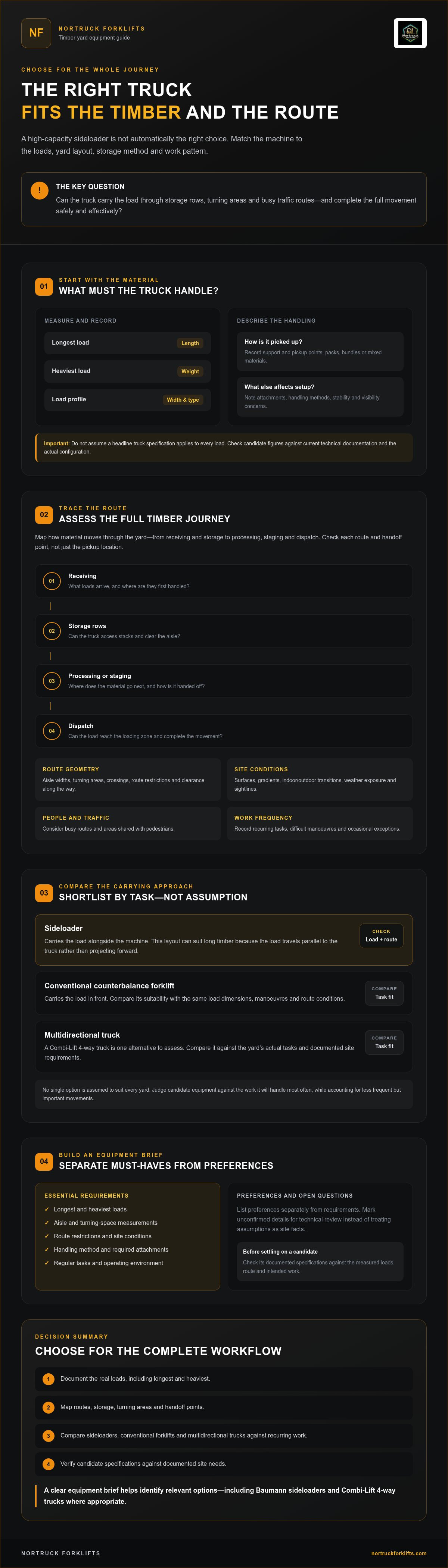
Timber-Yard Sideloader Assessment: Questions to Answer Before Sourcing
A useful equipment brief turns a general search for a sideloader for timber yard operations into requirements that can be checked. Use the steps below to separate confirmed site facts from preferences and details that still need professional verification.
What should you document during the site assessment?
- Step 1: Record representative loads. Note typical and maximum dimensions and weights, material formats, pickup points and any proposed attachment requirements. Mark estimates clearly so they are not mistaken for verified figures.
- Step 2: Describe the workflow. Map each movement from receiving through storage and processing to staging or dispatch. Include task frequency, operating schedules and peak periods.
- Step 3: Measure the routes. Record aisle and access widths, turning areas, crossings, loading zones and other clearances relevant to the truck and load.
- Step 4: Document site conditions. Note storage arrangements, ground surfaces, gradients, indoor and outdoor transitions, weather exposure and visibility concerns.
- Step 5: Flag what remains uncertain. Identify details that require manufacturer documentation, a site visit or review by a qualified equipment professional before treating them as requirements.
Which questions should you ask about candidate machines?
Ask for current, written specifications for each candidate, including capacity, overall dimensions, powertrain and the effect of any proposed attachments on the configuration. Check that the figures apply to the load and handling method you described, rather than relying on a headline capacity alone.
For a specific machine, clarify its condition and available documentation. Ask what support arrangements apply and who is responsible for them. Do not assume they are included in an equipment sale. Check technical suitability and site requirements with the relevant supplier, manufacturer or qualified professional.
How can you compare options fairly?
List must-haves first, such as the largest confirmed load, required route clearances and essential handling tasks. Put preferences, including powertrain choices, in a separate list. Label assumptions and open questions so they do not become hidden selection criteria.
Assess every candidate against the same load cases, routes and operating schedule. Record whether each requirement is verified, unresolved or not met, and request supporting evidence for important specifications. For broader European sourcing context, see the European forklift market guide.
Bring your documented requirements to an equipment adviser to discuss suitable options.
Finding a Timber-Yard Sideloader Through Expert Equipment Sourcing
A documented site brief gives an equipment adviser practical information to work from: the loads your yard handles, their routes and the operating conditions a candidate machine must meet. This can help narrow the options by application, while suitability still needs to be checked against current specifications and your site requirements.
What information helps an equipment adviser narrow the options?
Bring typical and maximum load dimensions and weights, handling points and any attachment requirements. Describe the load’s journey through receiving, storage, processing and dispatch, and include route measurements and task frequency. Note whether the work takes place indoors, outdoors or in both settings.
Explain the problem you want to solve and separate non-negotiable requirements from preferences. Share relevant details about existing equipment, storage arrangements, ground conditions, access restrictions and visibility concerns. Mark uncertain details so they can be checked rather than treated as facts.
How can Nortruck support a suitable sourcing conversation?
Nortruck Forklifts provides equipment sales and sourcing advice worldwide, sourcing new and used machinery from manufacturers across Europe. Its offerings include Baumann sideloaders and Combi-Lift 4-way trucks. These are options to discuss, not a guarantee that either category will suit a particular yard.
Lars G Tarby brings more than 40 years of experience in lifting equipment, according to the company. That experience can inform a practical discussion about your brief, the equipment categories worth considering and the specifications that still need confirmation. Check each candidate’s capacity, dimensions, powertrain and configuration against its current technical documentation.
What is a useful next step for a timber-yard buyer?
Before discussing a sideloader for timber yard use, bring your findings together in one brief: confirmed load and route data, operating patterns, essential requirements, preferences and unresolved questions. This helps an adviser understand what the yard needs the machine to do without assuming a particular model or equipment type is already the answer.
Discussing the brief can help identify relevant candidates for further review. Confirm the condition, documentation and availability of each specific option before making a decision.
Make Your Next Timber-Yard Equipment Decision with Confidence
The right handling solution depends on how your loads, routes and daily work fit together. Before selecting a sideloader for timber yard operations, document typical and maximum loads, map their routes and separate essential requirements from preferences. Then compare sideloaders, conventional forklifts and multidirectional trucks against the same operating conditions, checking candidate specifications before deciding.
Nortruck provides sales and advisory services and sources new and used machinery from manufacturers across Europe. Its offerings include Baumann sideloaders and Combi-Lift 4-way trucks. Suitability depends on your yard’s requirements. Lars G Tarby brings more than 40 years of lifting-equipment experience, according to the company.
A clear site brief is a practical starting point for a focused sourcing conversation. Establish what your yard needs, then use that information to assess the options with an adviser.
Frequently Asked Questions
Is a sideloader suitable for every timber yard?
No. A sideloader may suit a yard that regularly handles long loads and has routes where carrying material alongside the truck works with the storage and transfer layout. Another equipment type may suit better if the tasks, loads or clearances point elsewhere. Assess actual load dimensions, handling frequency, travel paths and operating conditions, then check candidate specifications before deciding.
How does a sideloader handle long timber loads?
A sideloader carries its load alongside the machine, while a conventional counterbalance forklift typically carries it in front. This arrangement may suit particular routes for moving long timber between receiving, storage, processing and dispatch areas. Clearances and handling requirements still need checking. Consider the load’s length, width, weight and pickup points, as well as turning areas and obstacles along the route.
What should I measure before choosing a sideloader for a timber yard?
Measure typical and maximum load length, width and weight, and note where loads are picked up and supported. Map route widths, storage rows, turning areas, crossings and loading zones. Record surface conditions, gradients, indoor and outdoor transitions and access restrictions. Include task frequency and visibility concerns. These details help an adviser identify what to check against machine specifications, including capacity, dimensions and attachment requirements.
Is an electric or diesel sideloader better for a timber yard?
Neither powertrain is automatically better. The right choice depends on the application and confirmed machine details. Consider whether work is indoors, outdoors or in both settings, and review charging or refuelling arrangements alongside shift patterns. Ask for verified emissions, runtime, charging and performance information for each candidate. Compare options against your actual workload rather than assuming one will be more economical or suitable.
Can a multidirectional forklift replace a sideloader in a timber yard?
It may be an alternative for some workflows, but suitability depends on the loads, routes and tasks involved. Assess a multidirectional truck where movement in more than one direction matters to the yard’s handling pattern. Compare its verified specifications with a sideloader using the same load cases, clearances and operating assumptions. Neither type is a universal replacement for the other.
What information should I provide when asking for a timber-yard sideloader recommendation?
Share typical and maximum load dimensions and weights, load formats, handling points, route measurements, storage arrangements and task frequency. Describe the movements the machine must perform, along with indoor or outdoor conditions, access limits and visibility concerns. Include existing equipment details if available. Separate essential requirements from preferences, and flag estimates or unknowns so an adviser can identify which specifications need checking.
Does Nortruck Forklifts rent sideloaders or provide on-site repairs?
No. Nortruck Forklifts provides equipment sales and sourcing advice, including sourcing new and used lifting equipment from manufacturers across Europe. The company does not offer short-term equipment rental or on-site maintenance and repair. Confirm the condition, documentation, availability and any support arrangements for a specific machine during the sourcing discussion.

Article by
Lars Gunnar Tärby
Disclaimer
1. General Information and No AdviceThe information, articles, product descriptions, and specifications provided on this website (www.nortruckforklifts.com) are for general informational and educational purposes only. While we strive to provide accurate and up-to-date content regarding new and used forklifts and heavy machinery, the material published does not constitute professional, technical, or legal advice.
2. Product Specifications and PricingNortruck Forklifts acts as a facilitator for the trade of new and used forklifts. All equipment details, including but not limited to year of manufacture, operating hours, lift capacity, dimensions, conditions, and pricing, are provided based on the information available to us at the time of publication. Specifications and availability are subject to change without prior notice.
3. "As Is" and VerificationAll articles and product listings are provided on an "as is" and "as available" basis without any warranties of any kind, either express or implied. Nortruck Forklifts does not guarantee that the descriptions are entirely error-free, complete, or reliable. Buyers and traders are strongly encouraged to independently verify all technical specifications, machine history, and equipment conditions directly with the seller or an authorized inspector before finalizing any purchase or transaction.
4. Limitation of LiabilityIn no event shall Nortruck Forklifts, its owners, or its contributors be held liable for any direct, indirect, incidental, consequential, or economic loss or damage arising out of the use of, or the inability to use, the information provided on this website, or any transactions facilitated through this platform. This includes, but is not limited to, damages caused by technical inaccuracies, typographical errors, or reliance on the content of our articles.
5. Third-Party LinksOur website may contain links to external websites, dealer networks, or third-party services that are not owned or controlled by Nortruck Forklifts. We have no control over, and assume no responsibility for, the content, privacy policies, or practices of any third-party websites.


