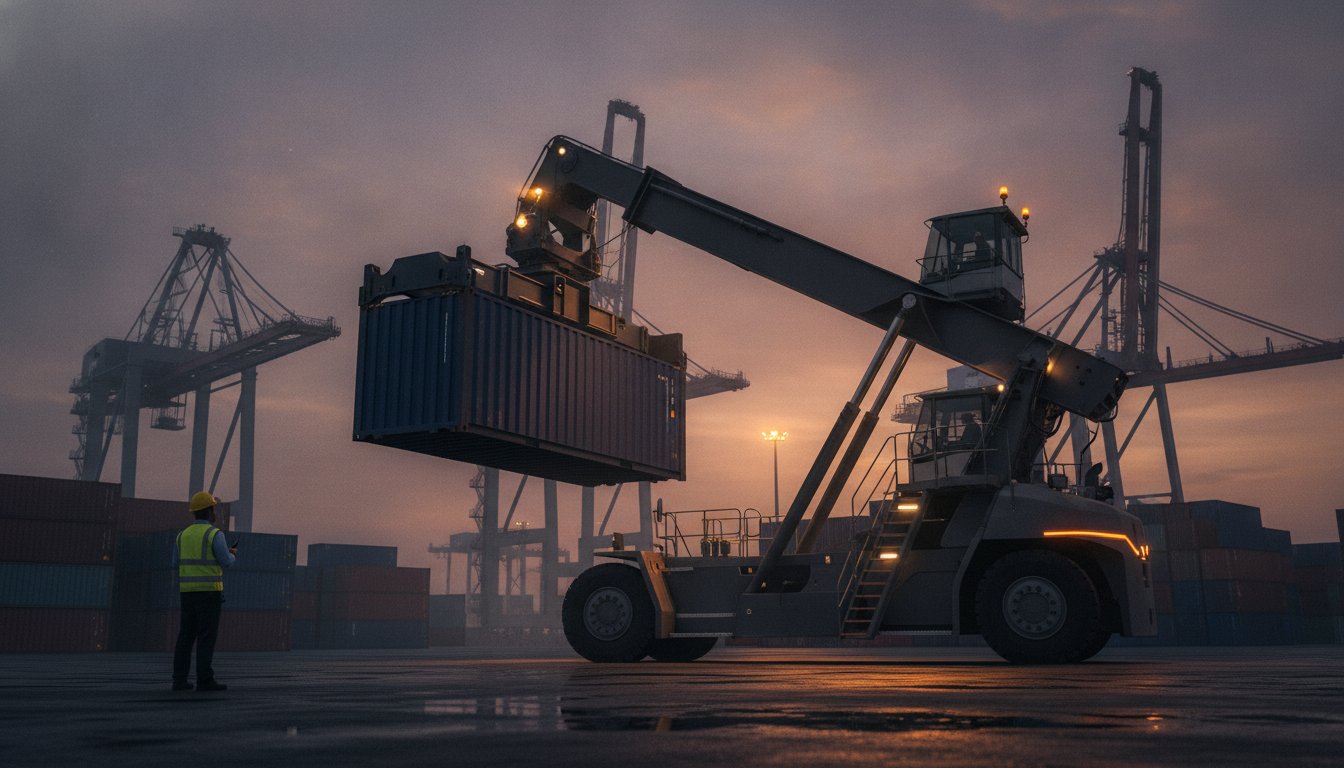
The salt air of a busy terminal is where shiny marketing brochures go to die. If you've managed port logistics for any length of time, you know that a machine's spec sheet matters far less than its ability to survive a 24/7 duty cycle without constant mechanical failure. Finding the best forklift for port operations isn't about picking the most popular brand. It's about matching specific engineering to the brutal, corrosive reality of container handling.
It's understandable to feel frustrated by rising total costs of ownership and the agonizingly long lead times currently plaguing the heavy equipment market. You need machinery that performs today, not a delivery promise for two years from now. This guide leverages 40 years of independent expertise to help you identify the most durable high-capacity forklifts and reachstackers for your terminal. We will compare the operational trade-offs of reachstackers versus heavy trucks, evaluate the reliability of brands like Kalmar and Linde, and show you how to source port-ready units directly from Europe.
Key Takeaways
- Understand why salt-air environments require specialized hydraulic seals and electrical protection to prevent premature mechanical failure in your terminal.
- Compare the operational advantages of reachstackers for stacking density against the versatility of heavy lift trucks for oversized project cargo.
- Identify the best forklift for port operations by evaluating the long-term reliability and advanced engineering of various heavy-duty models.
- Learn how to navigate the 2026 market by weighing the immediate availability of high-quality used machines against the extended lead times of new equipment.
- Discover how 40 years of independent expertise from Nortruck Forklifts can help you bypass manufacturer marketing to secure a machine that fits your specific duty cycle.
Why Port Environments Demand Specialized Heavy Lifting Equipment
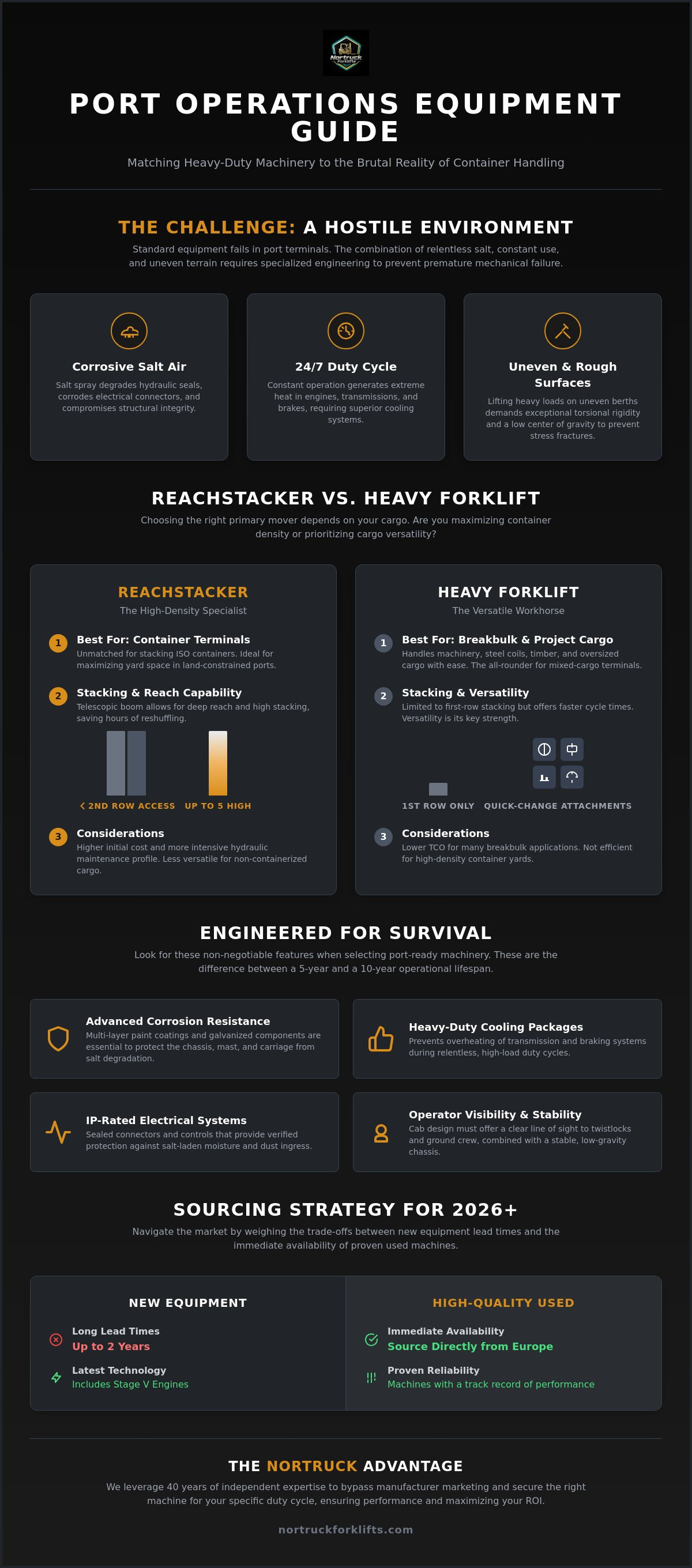
Standard industrial lifting equipment is built for flat concrete floors and climate-controlled warehouses. A port terminal is the exact opposite. Between the relentless salt spray, uneven berths, and the pressure of a 24/7 duty cycle, the environment is designed to find and exploit every mechanical weakness. Standard frames often lack the torsional rigidity needed for high-capacity lifts on uneven ground, leading to stress fractures over time. Selecting the best forklift for port operations requires looking beyond lifting capacity. You have to evaluate how the chassis, hydraulics, and electronics are protected against a climate that is actively trying to corrode them.
Corrosion Resistance and Durability
Salt air is a primary killer of heavy machinery. It doesn't just rust the bodywork; it eats through hydraulic seals and degrades electrical connectors. In these conditions, galvanized components and specialized, multi-layer paint coatings are non-negotiable. Protecting the mast and carriage from salt-spray degradation is the difference between a five-year operational lifespan and a ten-year one. IP-rated electrical systems are essential because they provide a standardized measurement of protection against the ingress of salt-laden moisture and dust that can short-circuit unprotected controls.
Duty Cycle Intensity and Cooling Systems
A standard Forklift might work a single eight-hour shift with frequent breaks. In a port, that same machine is often pushed through three consecutive shifts with minimal downtime. This intensity generates massive heat in the transmission and braking systems. Heavy-duty cooling packages are required to maintain operational temperatures during constant high-load shuttling. As we move into 2026, many major European ports now mandate Stage V engines to meet strict emission standards. This requirement isn't just about compliance; it's about utilizing a powertrain designed for the high-torque demands of moving heavy containers in a high-intensity cycle.
Port yards aren't always perfectly level. Handling high-capacity loads over uneven berths or rough gravel requires a machine with a low center of gravity and superior stability. Visibility is equally critical. When you're maneuvering a reachstacker or a heavy lift truck in a crowded yard, the operator needs a clear line of sight to the twistlocks and the surrounding ground crew. Finding the best forklift for port operations involves prioritizing structural integrity and visibility over short-term savings on a machine that isn't built for the task.
Reachstacker vs. Heavy Forklift: Choosing Your Primary Port Mover
The debate between reachstackers and heavy forklifts often comes down to one question: are you moving containers or everything else? For many, the best forklift for port operations is actually a combination of both, tailored to the terminal’s specific duty cycle. Reachstackers excel in high-density container environments because they can stack up to five high and reach into the second row. Standard Forklifts for container handling, while limited to the first row, offer a faster cycle time for single-row stacking. When considering Total Cost of Ownership (TCO), remember that while reachstackers have higher initial costs and maintenance needs, their ability to maximize yard space often offsets the expense in land-constrained ports.
Reachstackers for Container Terminals
Reachstackers provide unmatched flexibility for ISO container handling. Their telescopic boom allows for top-pick and bottom-pick capabilities, making them ideal for both loaded and empty container yards. Kalmar reachstackers are often considered the industry benchmark for their hydraulic reliability and sophisticated load-sensing systems. However, be prepared for a more intensive maintenance profile. Those hydraulic booms require regular inspection to ensure the telescopic mechanisms remain fluid and safe under 40-tonne loads. If your operations run 24/7, the ability to access second-row containers without moving the first row saves hours of shuffling time every week.
High-Capacity Forklifts for Breakbulk
If your terminal handles a mix of machinery, steel, and oversized project cargo, a high-capacity forklift is the more versatile choice. These machines aren't limited by the fixed spreader attachment of a reachstacker. With quick-change attachments like coil rams or timber forks, a single machine can transition between different cargo types in minutes. Linde and Toyota offer robust options in the 10-25 tonne range that provide the precision control needed for delicate breakbulk maneuvers. Their smaller operational footprint and tighter turning circles make them better suited for crowded quaysides where space is at a premium.
Specialized Handling: Sideloaders and 4-Way Trucks
Standard forklifts struggle with long, cumbersome loads like timber or steel pipes. This is where Baumann sideloaders become essential. They carry the load on a side platform, allowing for safe transport through narrow gates and aisles. For ports with extreme space constraints, Combi-Lift 4-way trucks offer multidirectional movement. These machines eliminate the need for wide turning circles by moving sideways, maximizing your storage footprint. If you aren't sure which configuration fits your specific yard layout, consulting with an independent advisor can prevent a costly mismatch between your machinery and your infrastructure.
Top Manufacturers for Port Operations: A Comparative Analysis
Selecting a manufacturer for heavy port equipment is rarely about brand loyalty. It's about matching a machine’s engineering limits to your terminal’s specific stressors. While a warehouse manager might prioritize initial purchase price, a port consultant looks at hydraulic resilience and drivetrain durability. The best forklift for port operations is the one that remains operational during peak vessel arrivals when every hour of downtime translates into lost revenue. Only a handful of manufacturers have mastered the 24/7 duty cycle required in maritime environments.
Kalmar: The Heavyweight Champion
Kalmar is widely considered the industry benchmark for heavy-duty reliability, particularly in the 30+ tonne lift category. Their DCG180-540 line covers capacities from 18 to 54 tons, while their super-heavy models can handle up to 85 tons. This dominance isn't just about raw power; it’s about the longevity of the chassis. Even in the secondary market, used Kalmar machines command high prices because their structural integrity often outlasts their original powertrains. When sourcing these units, it is vital to verify service histories to ensure the hydraulic systems haven't been compromised by deferred maintenance in corrosive environments.
Linde and Toyota: The Versatile Workhorses
For the 10-18 tonne range, Linde and Toyota offer distinct engineering advantages. Linde’s hydrostatic drive is a significant benefit for port shuttling. Because there is no mechanical clutch or gearbox, there is less wear during the constant directional changes typical of quay-side operations. This results in smoother handling and reduced operator fatigue. Toyota, on the other hand, is the gold standard for uptime and ease of training. Their machines are famously intuitive, which simplifies the onboarding process for new staff. Regardless of the brand you choose, ensuring your team follows OSHA Maritime Forklift Safety standards is essential for maintaining both operational efficiency and site safety.
Specialized cargo requires specialized manufacturers. If your terminal handles long loads like timber or steel pipes, Baumann sideloaders are the preferred choice. They allow for lateral transport, which is far safer and more space-efficient than traditional front-loading methods. For bulk material handling, such as grain or coal, Volvo wheel loaders are frequently sourced for their superior bucket capacities and robust transmissions. Similarly, for terminals managing liquid bulk or energy infrastructure, OG VALVES LTD. supplies specialized industrial valves designed for the oil, gas, and petrochemical industries. Navigating these options requires an "insider" perspective to cut through marketing fluff and find the machine that actually fits your operational footprint. My 40 years in the industry have shown that the right brand isn't always the most expensive one; it’s the one with the best serviceability in your specific European port hub.
Sourcing Strategy: Buying New vs. Used for Port ROI
The 2026 heavy equipment market presents a difficult choice for terminal managers. While a brand-new machine offers the latest Stage V engine technology and a full warranty, lead times often stretch well beyond 18 months. For a terminal facing immediate volume increases, waiting isn't a viable strategy. This is where high-quality used machinery offers a superior Return on Investment (ROI). By bypassing the steep initial depreciation curve, you can acquire the best forklift for port operations at a fraction of the cost while putting it to work in weeks, not years.
Evaluating Used Heavy Lifting Equipment
Buying used in the maritime sector requires a different set of eyes than buying for a standard warehouse. You're looking for evidence of the "Port Life." This means checking specifically for structural stress and salt-air degradation that a quick coat of paint might hide. When I inspect a machine, I focus on the high-stress areas that standard inspections often miss.
- Mast and Carriage: Inspect for hairline stress cracks, especially near the lift cylinder mounts and the carriage cross-members.
- Hydraulic Systems: Look for "weeping" seals. Salt air hardens rubber components faster than you'd expect, leading to sudden pressure losses.
- Engine Hours vs. Duty Cycle: High hours are less concerning if the maintenance history is consistent and the machine hasn't been idling excessively.
It is essential to verify the maintenance logs for any used reachstacker to ensure that the complex hydraulic boom assemblies have been serviced at the correct intervals. Balancing a lower purchase price against the potential for immediate repairs is the core of a smart Total Cost of Ownership analysis. A machine that looks like a bargain can quickly become a liability if the previous operator ignored hydraulic oil change intervals.
The European Sourcing Advantage
The European market is the primary hub for high-capacity machinery from brands like Kalmar, Linde, and Volvo. Because European terminals often have strict replacement cycles driven by environmental regulations or corporate leasing structures, the secondary market is filled with well-maintained units that still have a significant portion of their operational life remaining. Sourcing from this region gives you access to a much broader inventory than what is typically available locally.
Navigating the logistics of moving a 40-tonne reachstacker across borders is complex. It involves specialized heavy-haul permits, dismantled shipping, and export documentation. This is where an independent advisor adds the most value. Having a partner with 40 years of experience to verify the machine's condition prevents the risk of buying a "lemon" from across the world. If you're looking to upgrade your fleet without the two-year wait, talk to us about sourcing port-ready equipment from Europe.
The Nortruck Advantage: Expert Advisory for Port Logistics
Dealing with a brand-tied dealership often feels like being steered toward whatever inventory is currently on the lot. As an independent advisor, I don't answer to a manufacturer. My priority is finding the best forklift for port operations based on your specific berth requirements and cargo mix. With 40 years of experience in heavy lifting procurement, I've seen how machines that look perfect on a spec sheet can fail when faced with real-world maritime stressors. Nortruck Forklifts' process begins with a thorough operational audit. We don't just look at lifting capacity. We evaluate your cycle times, surface conditions, and current maintenance capabilities before recommending a specific machine.
A recent case study highlights the value of this independent approach. We assisted a terminal operator who needed to expand their container handling capacity immediately. The lead times for new equipment were quoted at 22 months. By leveraging our European network, we identified a 30-tonne reachstacker with a verified service history and a Stage V engine. We managed the entire procurement cycle, including the technical inspection and the complex logistics of heavy-haul transport. This allowed the client to have a port-ready machine on-site in a fraction of the time it would have taken to wait for a new build.
Efficiently managing these logistics is vital for terminal operations; for businesses seeking to optimize their broader supply chain, Warenous provides a consultancy service that connects you with a pre-screened network of global 3PL providers.
Cutting Through the Manufacturer Marketing
Manufacturer brochures are designed to highlight best-case scenarios. They rarely discuss how fuel consumption spikes under full-load shuttling or the reality of parts availability for specific older models. We provide honest data on these operational costs. We match machine specifications to your actual infrastructure, ensuring that axle loads and turning circles won't compromise your yard's safety or efficiency. As your advocate, we handle the technical due diligence and cut through the fluff to find a machine that actually fits your duty cycle. This transparency is what builds long-term trust in an industry where mistakes are expensive.
Start Your Port Sourcing Consultation
Finding the best forklift for port operations requires a partner who understands the internal nuances of the industry. Preparing for your first advisory session with Lars G Tarby is straightforward. It’s helpful to have your current fleet's maintenance history and your projected volume increases ready for review. This allows us to provide a tailored equipment recommendation that accounts for both your current budget and your future growth. We prioritize direct, honest communication to ensure you get the machinery you need without unnecessary intermediaries. Our goal is to move beyond a simple transaction and act as a specialized peer who values your operational efficiency.
Optimizing Your Terminal Fleet for Long-Term Performance
Selecting the best forklift for port operations involves balancing immediate operational needs with long-term durability. We've explored how the corrosive salt-air environment demands specialized engineering and why the choice between a reachstacker and a heavy lift truck depends entirely on your specific duty cycle. Whether you're navigating the 2026 market for new Stage V equipment or looking for the value found in high-quality used units from Europe, your decision will dictate your terminal's efficiency for years to come.
With 40 years of industry experience, Nortruck provides the independent guidance you need to bypass manufacturer marketing. We specialize in sourcing reliable machinery from Kalmar, Linde, and Toyota, giving you direct access to the European market without the typical lead-time frustrations. Transparency and expert due diligence are at the core of what we do. If you're ready to secure a machine that fits your operational footprint, we're here to help you navigate the process. Get Expert Sourcing Advice for Your Port Operations and ensure your next acquisition is built to handle the pressure.
Frequently Asked Questions
What is the best forklift capacity for handling loaded ISO containers?
A lifting capacity of 40 to 45 tonnes is the standard requirement for handling loaded 20ft and 40ft ISO containers safely. This capacity accounts for the maximum gross weight of a container plus the weight of the spreader attachment. Identifying the best forklift for port operations in this weight class involves verifying that the machine maintains its rated capacity when the boom is extended or the mast is at full height.
How long does a reachstacker typically last in a high-intensity port environment?
A high-quality reachstacker typically has an operational lifespan of 15,000 to 20,000 hours, which usually spans 10 to 12 years in a multi-shift terminal. Corrosive salt air and 24/7 duty cycles can accelerate wear on hydraulic seals and electrical components. Regular structural inspections and proactive rust prevention are essential to reaching the upper end of this lifespan without major chassis failure.
Can I use an electric forklift for outdoor port operations in 2026?
Yes, heavy electric forklifts with capacities up to 33 tonnes are now a viable reality for port terminals. By 2026, electric models are projected to constitute 55% of the market share as major hubs transition to zero-emission standards. These machines offer significantly lower annual operating costs, estimated between $1,500 and $2,000, compared to $12,000 or more for diesel equivalents used for the same duration.
What are the main differences between a reachstacker and a container handler?
Reachstackers use a telescopic boom that allows them to stack containers up to five high and reach into the second row of a stack. A dedicated container handler uses a vertical mast, which is often faster for single-row stacking but lacks the flexibility to access containers behind the first row. Your choice depends on whether you prioritize stacking density or pure cycle speed in your yard layout.
Why should I consider a used Kalmar reachstacker over a new mid-tier brand?
Residual value and structural durability are the primary reasons to choose a used Kalmar. These machines are engineered for long-term survival in maritime environments, and their chassis often outlast their original powertrains. Sourcing the best forklift for port operations from a premium brand ensures better parts availability and a higher resale value compared to budget brands that may struggle with reliability under 24/7 pressure.
What safety features are mandatory for port forklifts in Europe?
Mandatory safety features include load-moment indicators, twistlock engagement sensors, and Stage V engine compliance for major European ports. Modern standards also emphasize behavioral monitoring and advanced visibility aids like 360-degree cameras. Operators must be certified according to specific maritime safety regulations, and equipment must undergo documented daily inspections before every shift to remain compliant with 2026 safety standards.
How do I calculate the total cost of ownership for a 30-tonne forklift?
Calculate TCO by combining the initial purchase price with projected fuel or energy costs, insurance, and routine maintenance over a five-year period. You must then subtract the estimated residual value at the end of that term. In 2026, terminal managers are increasingly focusing on energy consumption and battery lifecycle costs, as these factors now represent a larger portion of the TCO than the upfront capital expenditure.
What is the lead time for sourcing a heavy-lift truck from Europe?
Lead times for brand-new heavy-lift machinery currently range from 18 to 24 months due to global supply chain constraints. However, sourcing a high-quality used unit through an independent advisor can reduce this timeframe to just 4 to 8 weeks. This includes the time needed for technical inspection, dismantling for transport, and final delivery to your terminal, allowing you to meet operational demands much faster.

Article by
Lars Gunnar Tärby
Disclaimer
1. General Information and No AdviceThe information, articles, product descriptions, and specifications provided on this website (www.nortruckforklifts.com) are for general informational and educational purposes only. While we strive to provide accurate and up-to-date content regarding new and used forklifts and heavy machinery, the material published does not constitute professional, technical, or legal advice.
2. Product Specifications and PricingNortruck Forklifts acts as a facilitator for the trade of new and used forklifts. All equipment details, including but not limited to year of manufacture, operating hours, lift capacity, dimensions, conditions, and pricing, are provided based on the information available to us at the time of publication. Specifications and availability are subject to change without prior notice.
3. "As Is" and VerificationAll articles and product listings are provided on an "as is" and "as available" basis without any warranties of any kind, either express or implied. Nortruck Forklifts does not guarantee that the descriptions are entirely error-free, complete, or reliable. Buyers and traders are strongly encouraged to independently verify all technical specifications, machine history, and equipment conditions directly with the seller or an authorized inspector before finalizing any purchase or transaction.
4. Limitation of LiabilityIn no event shall Nortruck Forklifts, its owners, or its contributors be held liable for any direct, indirect, incidental, consequential, or economic loss or damage arising out of the use of, or the inability to use, the information provided on this website, or any transactions facilitated through this platform. This includes, but is not limited to, damages caused by technical inaccuracies, typographical errors, or reliance on the content of our articles.
5. Third-Party LinksOur website may contain links to external websites, dealer networks, or third-party services that are not owned or controlled by Nortruck Forklifts. We have no control over, and assume no responsibility for, the content, privacy policies, or practices of any third-party websites.


