
If you found a 30-tonne Kalmar reachstacker at a fraction of the expected price, would you celebrate the bargain or start worrying about what is hiding in the hydraulic seals? Sourcing heavy machinery from across borders often feels like a high-stakes gamble where the prize is operational efficiency and the penalty is a costly, stationary asset. You likely recognize that Europe offers some of the world's best-maintained equipment, yet the distance makes it difficult to verify if a machine is truly "work-ready."
Learning how to source forklift from Europe requires more than just browsing online listings; it demands a technical eye for detail and a firm grasp of the latest 2026 regulations. This guide provides the expert insights you need to master the procurement process, from initial inspection to final delivery. We will explore how to navigate the new EU Machinery Regulation compliance, why direct advisory beats traditional brokerage, and how to manage complex logistics without the usual paperwork headaches. By the end, you will have a clear roadmap to securing high-quality equipment at a fair price, backed by forty years of industry expertise and a commitment to transparent, honest dealings.
Key Takeaways
- Gain access to premium European engineering from brands like Kalmar and Baumann, ensuring your fleet handles specialized heavy-duty applications with precision.
- Learn how to source forklift from Europe by prioritizing technical advisory over simple brokering to avoid hidden mechanical issues and inflated commission fees.
- Master the critical technical requirements, including lift capacity and mast visibility, to ensure your equipment fits your specific yard layout and operational needs.
- Navigate the 2026 European sourcing process through a structured step-by-step approach that covers everything from initial consultation to international transport.
- Understand the value of independent procurement, where the focus remains on finding the best machine for your operation rather than meeting brand sales quotas.
Why Source Industrial Forklifts from the European Market?
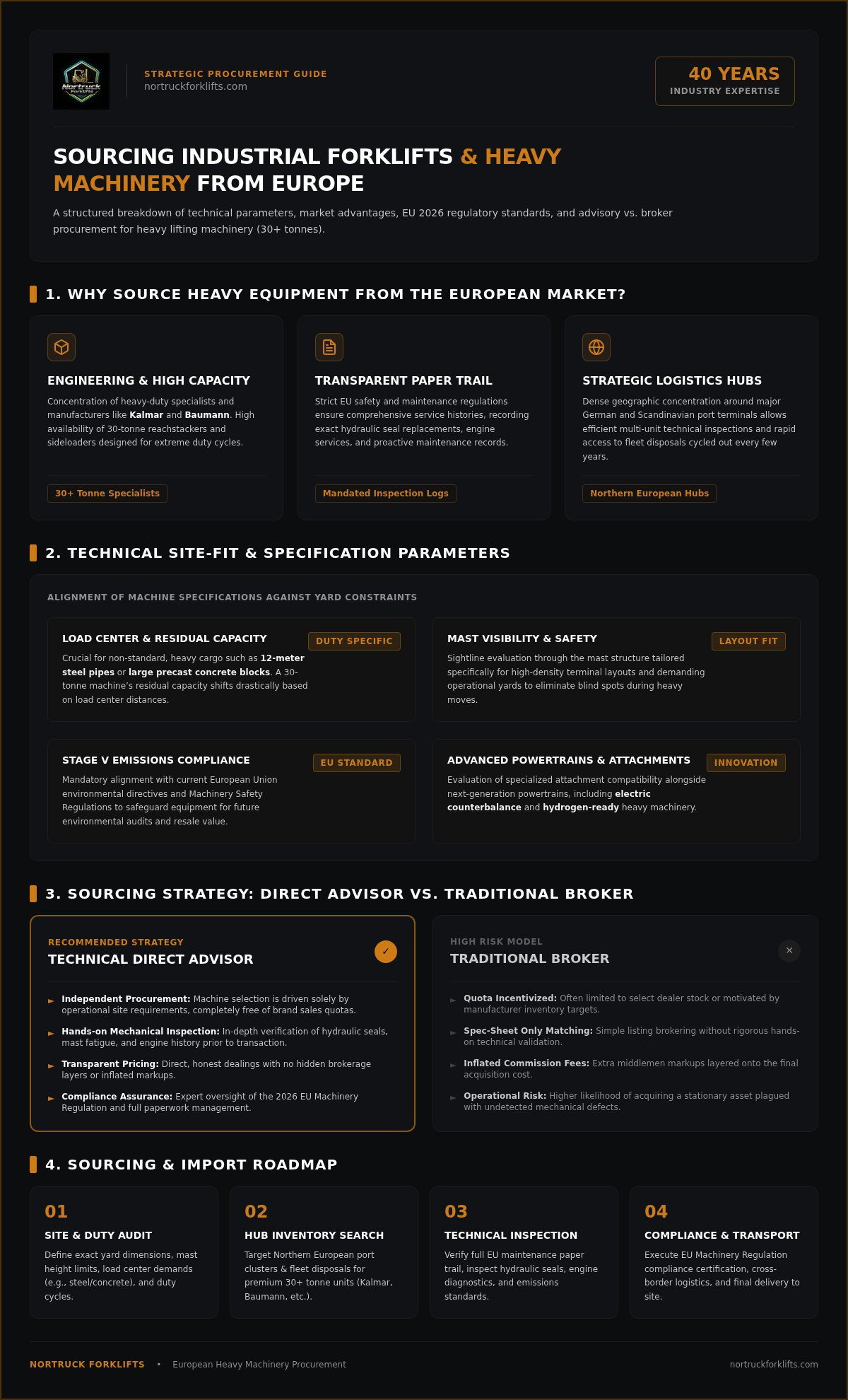
Europe remains the global epicenter for heavy lifting technology. If you look at the major players in the industry, specialized manufacturers and heavy-duty specialists dominate because of their commitment to engineering precision. Sourcing from this market gives you access to a wider inventory of specialized equipment, such as 30-tonne reachstackers and sideloaders, which are often scarce in other regions. These machines are engineered for the grueling environments of port terminals and steel mills where downtime isn't an option.
Understanding how to source forklift from Europe starts with recognizing that the region's manufacturers set the benchmark for durability. Whether you're looking for port-specific machinery or heavy-duty trucks for steel operations, the concentration of high-capacity equipment in Northern European hubs provides a strategic advantage. These machines aren't just built to lift; they're built to last under intense duty cycles. You'll find that the availability of high-capacity trucks (30+ tonnes) is significantly higher here than in smaller, fragmented markets.
To better understand what to look for during your search, watch this helpful video:
The Hub of Heavy Lifting Innovation
Europe is the manufacturing home for industry leaders who define the future of material handling. Advanced engineering firms have pioneered advancements in electric counterbalance and hydrogen-ready heavy trucks, driven by the EU's aggressive decarbonization goals. These machines are designed to meet various industrial forklift classifications, ensuring they handle specific load centers and duty cycles with ease. Northern European hubs, particularly around major ports in Germany and Scandinavia, serve as a dense source of specialized port-terminal equipment that isn't easily found elsewhere. This geographic concentration allows for a more efficient inspection process when multiple units are located in the same region, a process often streamlined by working with experienced partners like Nortruck Forklifts.
Value in the Second-Hand European Market
The second-hand market in Europe is distinct because of rigorous service history requirements. EU jurisdictions mandate strict maintenance schedules and safety inspections. Used machinery often arrives with a transparent paper trail that details every hydraulic seal replacement and engine service. You can source "nearly-new" fleet disposals from major logistics hubs where equipment is cycled out every few years to maintain peak efficiency. Compared to other global markets, European machines typically offer a longer operational lifespan. This longevity is a direct result of high standards of care, the use of premium components during initial manufacturing, and a culture of proactive rather than reactive maintenance.
Technical Requirements: Identifying the Right Machine for Your Site
Selecting a machine based on a spec sheet alone often leads to operational bottlenecks. When you investigate how to source forklift from Europe, your first priority is aligning the machine’s technical profile with your site’s physical constraints. This involves more than just checking the maximum lift height. You must evaluate visibility through the mast, especially for high-density yards, and ensure the engine meets the latest Stage V emissions standards required by European Union machinery safety regulations. These standards aren't just red tape; they ensure the equipment remains compliant for future resale and environmental audits.
For heavy-duty applications, the load center is a critical variable. A 30-tonne forklift doesn't behave like a 2-tonne warehouse truck. If your application involves non-standard dimensions, like 12-meter steel pipes or large precast concrete blocks, the machine’s residual capacity changes drastically. It's essential to verify attachment compatibility for specific industries, such as specialized clamps for steel coils or spreaders for container handling. If you're unsure about the specific requirements for your facility, it helps to discuss your operational scope with an expert advisor who understands these technical nuances.
High-Capacity Forklifts for Steel and Concrete
Lifting 30-tonne loads requires more than raw power. In steel mills or concrete plants, equipment faces extreme heat and abrasive dust. You should look for machines equipped with specialized cooling systems and pressurized cabins to protect both the operator and the electronics. For a deeper look at these specific requirements, read our Heavy Duty Forklifts for Concrete: 2026 Procurement Guide. These features prevent the premature component failure that often plagues generic machinery in specialized environments.
Sideloaders and Multidirectional Solutions
Not every lifting challenge is best solved with a traditional counterbalance truck. If your yard handles long, cumbersome loads like timber or structural steel, a Baumann sideloader offers superior stability by carrying the load on a dedicated platform. Alternatively, Combi-Lift multidirectional trucks provide the agility needed for narrow-aisle timber yards. These machines utilize specialized steering modes to move sideways, effectively increasing your storage capacity by reducing the width of required aisles. Choosing the right steering configuration is just as important as the lift capacity itself. It's about finding the balance between specialized movement and daily reliability.
The Sourcing Strategy: Advisor vs. Broker
Browsing online auction platforms might feel like a shortcut to a bargain, but "blind buying" heavy machinery is a high-risk strategy. When you're investigating how to source forklift from Europe, the distinction between a transactional broker and an independent advisor becomes critical. A broker's primary goal is to close the sale and move to the next listing. In contrast, an independent advisor functions as your procurement partner, focusing on the machine's long-term operational suitability for your specific site. It’s the difference between buying a list of specs and investing in a verified solution.
The European market is vast, and without an "insider" perspective, it's easy to fall into the trap of paying for a machine that looks good in photos but fails under load. Technical accountability is often missing in standard brokerage models. An advisor bridges this gap by performing mechanical audits, verifying service histories, and ensuring the equipment's specifications match your facility's requirements. This level of scrutiny is what separates a strategic asset from a costly liability. You need someone who knows what a well-maintained engine sounds like, not just someone who can forward an invoice.
Avoiding the Pitfalls of Generic Brokers
Generic brokers often operate as simple intermediaries, listing machines they have never physically inspected. This model frequently involves "layered" commissions, where multiple parties add their own margins to the final price. You end up paying more for less transparency. These brokers rarely have the technical depth to answer complex questions about hydraulic wear or mast fatigue. Professional consultation removes these unnecessary middlemen, providing you with a direct line to expert knowledge. It's about establishing a relationship built on integrity rather than a one-off transaction. You don't want your procurement process to be a game of telephone between three different brokers.
Transparency and Integrity in Procurement
A solution-oriented approach starts with understanding your operational scope. It’s not just about the lift capacity; it’s about how that machine integrates into your workflow. Lars G. Tarby brings over 40 years of industry experience to every negotiation, facilitating better terms and ensuring no technical detail is overlooked. This expertise helps you navigate OSHA powered industrial truck guidelines regarding power sources and facility compatibility, even when sourcing from overseas. Ensuring all technical specifications are met before the purchase prevents expensive retrofitting later. For a comprehensive look at the current landscape, our European Forklift Market Guide 2026 provides the context needed for a successful acquisition. This methodical process ensures you find a high-quality machine at a fair price, backed by expert verification.
Step-by-Step: The European Sourcing and Import Process
Procuring heavy machinery across international borders is a methodical sequence of technical and administrative checks. If you are learning how to source forklift from Europe, you must treat the process as a professional project rather than a simple purchase. It begins with an initial consultation to define your operational scope and capacity needs. This step ensures the machine you target is capable of handling your specific duty cycles and load centers. Once the scope is clear, the sourcing phase identifies suitable units from brands like Kalmar, Toyota, or Linde across different European regions.
The middle stages of the process focus on technical verification and documentation. A thorough inspection covers the mast, hydraulics, and engine health to ensure the machine is work-ready. Following a successful audit, managing the paperwork becomes the priority. This includes handling VAT, export declarations, and verifying CE certificates to ensure compliance with current 2026 regulations. The final stage is logistics, where you organize heavy-haulage transport or Roll-on/Roll-off (RoRo) shipping for port delivery. Each step requires precision to avoid costly delays at the border or operational failure upon arrival.
Critical Inspection Points for Used Machinery
Hour meters provide a baseline, but they don't tell the full story of a machine's condition. You must analyze the actual wear on hydraulic seals and check the structural integrity of the chassis, particularly on high-capacity trucks. For modern Kalmar reachstackers, verifying software and firmware versions is just as vital as checking the mechanical components. Outdated software can lead to compatibility issues with newer diagnostic tools or terminal operating systems. A physical inspection should also identify signs of stress fractures in the mast, which are often invisible in standard auction photos.
Navigating Logistics and Paperwork
Understanding Incoterms is essential for managing your financial and operational risk. Whether you are operating under EXW (Ex Works), FCA (Free Carrier), or DAP (Delivered at Place), you must know exactly where your responsibility begins. Managing transport for over-dimensional loads exceeding 30 tonnes requires specialized permits and heavy-duty trailers. Smooth customs clearance in the destination country depends entirely on the accuracy of your export declarations and machine history records. Missing a single document can result in weeks of storage fees at a port terminal, negating any initial savings on the purchase price.
Partnering with Nortruck Forklifts for Your Next Acquisition
Accessing the European market shouldn't be a solo endeavor. When you decide how to source forklift from Europe, the most critical choice is your procurement partner. Unlike brand-specific dealers who are incentivized to sell their own inventory, Nortruck Forklifts operates with total independence. We prioritize the technical suitability of the machine over manufacturer quotas. This approach ensures you receive an objective assessment of whether a Kalmar reachstacker or a Baumann sideloader is the right fit for your facility. We manage the entire lifecycle of the acquisition, providing end-to-end advisory from the initial discovery call to the machine’s arrival at your site.
Our specialization focuses on high-capacity and specialized equipment, including Combi-Lift 4-way trucks and Volvo wheel loaders. We understand that heavy-duty operations in ports or steel mills require more than a generic lifting solution. By eliminating unnecessary intermediaries, we maintain a direct, honest line of communication that prioritizes your operational efficiency. You gain a partner who understands the technical nuances of the industry and values long-term solutions over quick, transactional wins.
Why Lars G. Tarby's Expertise Matters
Lars G. Tarby’s 40 years of industry experience provides a perspective that generic brokers simply cannot match. He understands the internal nuances of European fleet disposal cycles, often identifying high-quality units before they reach public auction platforms. This insider access is vital for sourcing hard-to-find equipment, such as 30-tonne reachstackers for port terminals. His technical ability to spot structural or hydraulic issues prevents the acquisition of machinery that looks clean on the surface but hides mechanical fatigue. This commitment to transparency and grounded, professional confidence ensures you aren't just buying a machine; you're securing a verified asset.
Getting Started with Your Sourcing Request
A successful consultation begins with a clear definition of your site’s physical and operational constraints. We help you define a tailored lifting solution by analyzing your specific load centers, aisle widths, and daily duty cycles. Before your first call, it's helpful to prepare your site specifications, including floor capacity and any specialized attachment requirements for materials like timber or precast concrete. This data allows us to filter the European market effectively, focusing only on machines that meet your exact operational profile. We look for precision and suitability, ensuring every technical metric aligns with your business goals.
Securing Your Operational Future with Expert Procurement
Mastering how to source forklift from Europe requires a shift from transactional browsing to strategic partnership. You've seen that the European market offers unparalleled quality in heavy-duty machinery, provided you can navigate the technical and logistical hurdles. Success depends on verifying machine history, ensuring compliance with the latest 2026 safety standards, and matching the equipment's technical profile to your site's specific duty cycles.
By prioritizing independent advisory over generic brokerage, you eliminate hidden intermediaries and gain direct access to premium equipment like Kalmar reachstackers and Baumann sideloaders. This methodical approach ensures your next acquisition is a work-ready asset rather than a mechanical gamble. Your operation deserves equipment that matches its complexity. With 40+ years of industry experience and a commitment to transparent, honest dealings, we are ready to guide your search and simplify your procurement process.
Taking the first step toward a more efficient fleet starts with a simple conversation. We look forward to helping you find the right lifting solution for your business.
Frequently Asked Questions
What are the most reliable forklift brands to source from Europe?
Kalmar, Linde, Toyota, Baumann, and Combi-Lift are the most reliable brands to source. These manufacturers have a strong European footprint, ensuring that components are built to high standards. Kalmar is the leader for heavy lift trucks, while Baumann and Combi-Lift excel in specialized handling. Sourcing these brands ensures you're investing in machinery with a proven track record for durability and long-term operational efficiency across various industrial applications.
How do I verify the service history of a used forklift in Europe?
Verification requires a direct audit of the machine's maintenance logs and original CE declarations. You should look for consistent service intervals performed by authorized technicians. It's vital to cross-reference the hour meter with physical wear on hydraulic seals and the mast. We often perform these technical audits personally to ensure the paper trail matches the machine's actual condition; preventing any surprises after the purchase is finalized.
Is it better to buy new or used when sourcing from Europe?
The choice depends on your lead times and budget. New machines offer the latest technology but often come with long factory wait times. Used machinery, if sourced correctly, provides immediate availability and significant cost savings. When you understand how to source forklift from Europe, you can find used units that have been meticulously maintained within major logistics hubs, offering a lifespan comparable to newer models at a fairer price point.
What documentation is required to import a forklift from the EU?
You will need a commercial invoice, a packing list, and an export declaration. Additionally, a Certificate of Conformity is essential to prove the machine meets European safety standards. For 2026, you must also ensure the documentation complies with updated EU machinery regulations. Managing these documents correctly prevents delays at the border and ensures that your equipment is legally compliant in its new destination; avoiding unnecessary storage fees.
How long does the sourcing and transport process typically take?
The timeline generally ranges from four to eight weeks from the initial consultation to delivery. This period includes the time needed for technical inspections, documentation processing, and organizing international transport. Heavy-haulage for 30-tonne machines or RoRo shipping for port terminals can add complexity to the schedule. We work to streamline this process by coordinating directly with manufacturers and logistics partners to minimize any potential operational downtime for your facility.
Can I source specialized equipment like 30-tonne reachstackers through Nortruck Forklifts?
Yes, we specialize in sourcing high-capacity equipment like 30-tonne reachstackers and container handlers. These machines are a core part of our expertise, particularly brands like Kalmar. We leverage our direct access to European manufacturers and fleet disposal cycles to find specialized units that aren't typically available on the open market. This allows us to secure hard-to-find machinery that meets your specific port or industrial terminal requirements with professional confidence.
What are the common pitfalls when buying forklifts from online auctions?
The most common pitfalls include hidden mechanical issues and layered commission fees from multiple brokers. Online photos often hide structural fatigue or hydraulic leaks that only a physical inspection can reveal. Buyers also frequently underestimate the complexity of cross-border logistics and paperwork. Without expert verification, you risk purchasing a machine that requires expensive retrofitting or faces significant delays during the customs clearance process; negating any initial savings on the purchase.
How does Nortruck Forklifts' advisory service differ from a standard equipment broker?
We act as an independent partner rather than a transactional intermediary. Standard brokers often focus on moving inventory they don't own; whereas we provide a technical audit of every machine. Our process is transparent, with no hidden fees or brand quotas. By learning how to source forklift from Europe through our direct advisory, you get a tailored solution based on forty years of industry experience and a commitment to your long-term success.

Article by
Lars Gunnar Tärby
Disclaimer
1. General Information and No AdviceThe information, articles, product descriptions, and specifications provided on this website (www.nortruckforklifts.com) are for general informational and educational purposes only. While we strive to provide accurate and up-to-date content regarding new and used forklifts and heavy machinery, the material published does not constitute professional, technical, or legal advice.
2. Product Specifications and PricingNortruck Forklifts acts as a facilitator for the trade of new and used forklifts. All equipment details, including but not limited to year of manufacture, operating hours, lift capacity, dimensions, conditions, and pricing, are provided based on the information available to us at the time of publication. Specifications and availability are subject to change without prior notice.
3. "As Is" and VerificationAll articles and product listings are provided on an "as is" and "as available" basis without any warranties of any kind, either express or implied. Nortruck Forklifts does not guarantee that the descriptions are entirely error-free, complete, or reliable. Buyers and traders are strongly encouraged to independently verify all technical specifications, machine history, and equipment conditions directly with the seller or an authorized inspector before finalizing any purchase or transaction.
4. Limitation of LiabilityIn no event shall Nortruck Forklifts, its owners, or its contributors be held liable for any direct, indirect, incidental, consequential, or economic loss or damage arising out of the use of, or the inability to use, the information provided on this website, or any transactions facilitated through this platform. This includes, but is not limited to, damages caused by technical inaccuracies, typographical errors, or reliance on the content of our articles.
5. Third-Party LinksOur website may contain links to external websites, dealer networks, or third-party services that are not owned or controlled by Nortruck Forklifts. We have no control over, and assume no responsibility for, the content, privacy policies, or practices of any third-party websites.


