
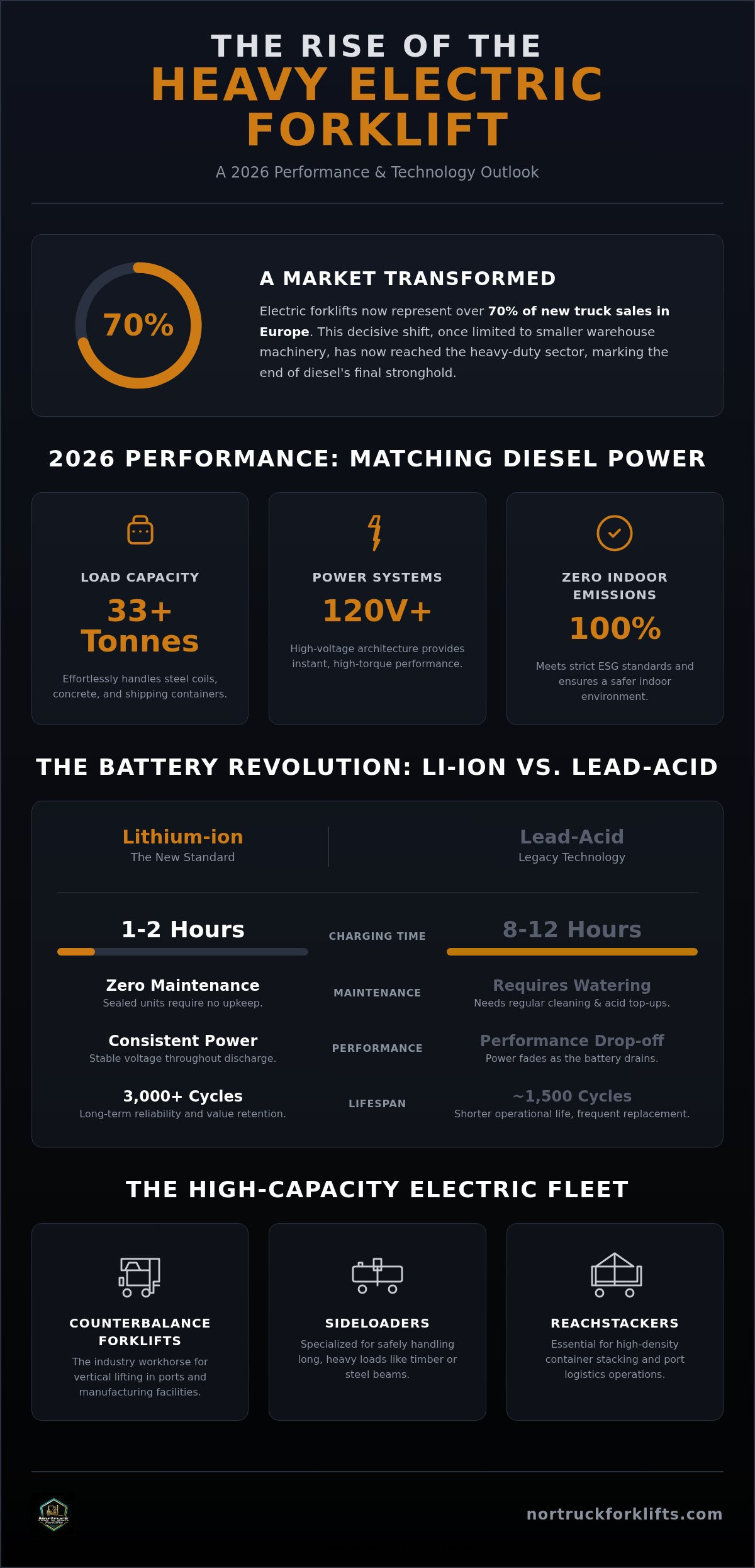
Did you know that electric forklifts now account for more than 70% of new truck sales in Europe? For years, the heavy-duty sector was the final stronghold for diesel engines, but that's changing fast. In 2026, the shift to 120V+ systems and high-capacity lithium-ion technology means a heavy electric forklift can finally match the raw power of internal combustion without the punishing fuel costs or indoor emission issues.
You're likely feeling the pressure of rising operational expenses and the need to meet strict ESG standards. It's understandable to have concerns about whether a battery-powered machine can truly handle 30 tonnes for a full shift or if the charging infrastructure is ready for your yard. I'll show you exactly how these high-capacity machines are replacing diesel in heavy industry and how they significantly lower your total cost of ownership over time.
In this guide, we'll examine the latest performance benchmarks for 2026 and look at how to navigate the European sourcing market to find the right equipment for your fleet. From understanding battery life to securing reliable machinery from brands like Kalmar or Linde, you'll gain the clarity needed to make a confident investment.
Key Takeaways
- Learn how 2026 battery standards allow electric units to handle loads exceeding 33 tonnes, effectively matching diesel performance in port and manufacturing settings.
- Understand the financial advantages of a heavy electric forklift, including how reduced maintenance and lower energy costs accelerate your break-even point.
- Discover why Lithium-ion technology and opportunity charging are essential for maintaining high-intensity, multi-shift workflows without the need for long battery swaps.
- Gain insights into sourcing high-quality machinery from European manufacturers like Kalmar and Linde to ensure your fleet meets the latest safety and emission standards.
- See how expert advisory helps you bypass intermediaries and secure the specific heavy-lift equipment required for your unique industrial application.
What Defines a Heavy Electric Forklift in 2026?
In the past, "heavy duty" almost always meant diesel. In 2026, the threshold for a heavy electric forklift starts at 10 tonnes and extends well beyond 33 tonnes. This isn't just a minor update to warehouse tech. It's a fundamental rebuild of industrial power. The transition from lead-acid to high-density Lithium-ion (Li-ion) has removed the old barriers of slow charging and power drop-off, making electrification viable for the most demanding environments.
When you examine the history of electric forklifts, it's clear that the leap from 80V to 120V+ systems represents the most significant shift in decades. This voltage increase allows for high-torque performance that matches internal combustion engines. It's why 2026 is the tipping point for sectors like steel mills, concrete plants, and port terminals where power and reliability are non-negotiable.
To better understand how these power sources stack up in real-world conditions, watch this helpful comparison:
The Core Components of High-Capacity Electric Lifts
Modern heavy lifts rely on sophisticated engineering to maintain performance during long shifts. High-voltage drive systems, typically 120V or higher, are now the industry standard to reduce current draw and heat generation. Advanced thermal management keeps the battery stable during intensive cycles, while regenerative braking systems capture energy during deceleration to extend your operational runtime. These components ensure the machine stays cool and efficient, even when moving massive loads in semi-enclosed industrial spaces.
Classifying Heavy Electric Machinery
You'll find two primary categories in the heavy-lift space today. Heavy-duty counterbalance forklifts from brands like Kalmar and Linde handle traditional vertical lifting, while specialized electric sideloaders from Baumann are better suited for long, heavy loads like timber or steel beams. In port logistics, electric reachstackers are now managing container stacks with the same precision as their diesel predecessors. A heavy electric forklift is an emission-free alternative to 10-tonne+ diesel units, providing the same rugged performance without the environmental or maintenance overhead.
Battery Technology and Operational Runtime
The heavy-duty sector has historically struggled with lead-acid batteries due to the sheer mass and power required for a 20-tonne lift. Lead-acid units often lose voltage as they discharge, which causes a noticeable drop in performance during long shifts. By 2026, Lithium-ion (Li-ion) has become the definitive standard for any heavy electric forklift. It provides consistent power delivery throughout the entire discharge cycle. This stability is critical for maintaining the high torque needed when handling steel coils or concrete slabs in demanding environments.
Battery chemistry doesn't just impact daily work; it dictates the long-term value of the machine. Li-ion batteries maintain a much higher energy density over thousands of cycles compared to older technologies. When you look at the secondary market, a used Kalmar or Linde with a healthy Li-ion pack retains significantly more value. It's a strategic consideration for fleet managers planning their equipment cycles. If you're unsure if your current facility can support these high-voltage requirements, consulting with an independent advisor can help you map out a feasible transition plan.
Li-ion vs. Lead-Acid for Heavy Lifting
The operational differences between these two technologies are stark. Lithium-ion reaches a full charge in approximately 1-2 hours, while lead-acid requires 8-12 hours plus a mandatory cooling period. From a maintenance perspective, Li-ion is a zero-maintenance solution. In contrast, lead-acid requires regular watering and cleaning to prevent acid corrosion. These tasks often necessitate dedicated battery rooms to meet OSHA safety standards for electric forklifts. Industrial Li-ion packs are typically rated for 3,000 to 6,000 cycles, which easily doubles or triples the lifespan of traditional alternatives.
Infrastructure Requirements for Electric Fleets
Transitioning a heavy-lift fleet requires more than just buying the trucks. You must assess your site's grid capacity first. High-voltage 120V+ chargers draw significant power during peak times. Strategic placement of these stations is also vital to minimize "dead travel" time. By positioning chargers near break areas or loading docks, operators can utilize "opportunity charging." Plugging in for just 20 minutes during a shift break can provide enough energy to finish a demanding day without a full recharge. This eliminates the need for the time-consuming battery swaps that were common in older industrial setups. Modern fast-charging systems are designed to manage heat effectively, ensuring that frequent top-ups don't compromise the long-term health of the battery cells.
TCO Analysis: Why Electric Wins in High-Capacity Logistics
While the initial purchase price of a heavy electric forklift is typically higher than a diesel model, the total cost of ownership (TCO) reveals a significant long-term advantage. For high-capacity logistics, the break-even point often arrives sooner than expected. This is primarily driven by the radical reduction in maintenance. Electric motors contain 30-50% fewer moving parts than internal combustion engines. You don't have to deal with oil filters, fuel pumps, or complex exhaust after-treatment systems. These savings accumulate quickly in high-intensity operations where downtime is the most expensive factor.
Energy cost stability is another critical factor for your fleet. Diesel and AdBlue prices fluctuate wildly based on global markets. Electricity rates, while they vary, are generally more predictable and significantly lower when measured against the work performed. When you add the impact of carbon taxes and emission penalties across Europe, the financial case for electric becomes undeniable. Fleet managers are finding that the "green" choice is actually the most profitable one when looking at a five to seven-year equipment cycle.
Operational Savings and Efficiency
Electric motors offer a unique efficiency: they only consume power when the machine is actually moving or lifting. In contrast, diesel units often spend hours idling during loading delays, burning fuel and wearing down components for no gain. Eliminating these idling costs directly impacts your bottom line. Beyond the fuel savings, removing exhaust fumes from indoor or semi-enclosed spaces leads to better air quality. This isn't just about compliance; it's about worker productivity. A cleaner, quieter environment reduces operator fatigue and can lower turnover in high-stress port or mill environments.
Residual Value and the Used Market
The secondary market for high-capacity equipment is shifting. As more companies commit to net-zero targets, the demand for used electric machinery is outpacing diesel in the European market. Modern battery health diagnostics provide a level of transparency that was previously impossible. You can verify the exact condition of a Lithium-ion pack before purchase, which protects your investment and ensures a predictable lifespan. If you're considering a pre-owned unit, it's vital to follow a rigorous evaluation process. Check out our Used Heavy Lifting Equipment Inspection Checklist for more detail on what to look for during the sourcing process.
Sourcing Heavy Electric Machinery from Europe
Europe currently leads the global market in high-capacity electric lift manufacturing. This leadership is driven by decades of strict environmental regulations and a highly developed logistics infrastructure. When you're searching for a heavy electric forklift, the European market provides access to the most advanced 120V+ systems currently in operation. Manufacturers here have already moved past the experimental phase, delivering machines that are as rugged as their diesel counterparts.
The used market in Europe is particularly valuable for businesses looking to transition without the full capital expense of a new unit. Because European firms often cycle their fleets regularly, you can find well-maintained machinery with detailed service logs. However, navigating this market requires a specialized eye. You aren't just checking tires and hydraulics; you're auditing software, battery health, and high-voltage inverter systems. This is why having an independent advisor is essential to verify that a machine's actual condition matches its paperwork before you commit to buying a used heavy electric forklift.
Sourcing Kalmar and Linde Electric Units
Kalmar has set the benchmark for port logistics with its electric reachstackers and heavy forklifts. These machines are designed for the most grueling container-handling environments. Linde, on the other hand, excels in precision. Their heavy-duty electric counterbalance range is often the preferred choice for indoor industrial facilities where space is tight but loads are massive. For a deeper look at procuring these specific units, see our Linde Forklift for Sale: The Professional Procurement Guide.
The Procurement Process: From Search to Delivery
Sourcing a high-capacity machine involves a methodical three-step approach to ensure the equipment fits your operational reality. First, we map your technical requirements. This goes beyond simple lift capacity; it includes analyzing your floor gradients, shift patterns, and existing grid capacity. Second, we tap into broad European networks to find units with the best maintenance records. Finally, we conduct a rigorous verification of battery cycle counts and motor service history. This level of due diligence prevents a bargain purchase from becoming a liability. It's about finding a machine that will perform from day one.
Expert Advisory with Nortruck Forklifts
Selecting a high-capacity machine is a significant capital investment that requires more than just a quick look at a spec sheet. Lars G Tarby brings 40+ years of heavy lifting expertise to every consultation, ensuring that your transition to electric power is grounded in technical reality. Sourcing a heavy electric forklift across borders involves complex logistics and technical verification that most general marketplaces simply cannot provide. We act as your independent partner, focusing on the functional suitability of the equipment rather than meeting brand-specific sales quotas.
Our process is designed to minimize the inherent risks of cross-border procurement. When you move equipment across Europe, you need certainty regarding the battery health, motor condition, and service history. We handle the due diligence, verifying that every machine meets the high standards required for intensive industrial use. This transparent, expert-led approach ensures that you receive a machine ready for immediate deployment, avoiding the hidden costs often associated with unverified used equipment.
Why an Independent Advisor Matters
Single-brand dealerships are naturally biased toward their own inventory. As independent advisors, we provide an objective perspective that prioritizes your operational needs. Whether a Kalmar, Linde, or Toyota unit is the best fit depends entirely on your specific cycle times and load requirements. We often find hidden value in the European used market that isn't visible on public listing sites. This specialization is particularly valuable for niche sectors, such as providing tailored advice for heavy duty forklifts for concrete, where dust and high-vibration environments demand specific machine configurations.
Get Started with Your Electric Transition
The path to a cleaner, more efficient fleet begins with a methodical assessment of your current workflow. Our initial consultation focuses on mapping your technical requirements against the available technology in 2026. We don't use intermediaries; you'll have direct communication with our experts for honest, straightforward dealings. Once we define your needs, we leverage our extensive European network to source high-capacity units from trusted partners. Our goal is to ensure that selecting the right heavy electric forklift for your specific application is a deliberate, data-driven decision that supports your long-term operational goals.
Securing the Future of Your Heavy-Lift Fleet
The transition to high-capacity electric power is a strategic move that pays dividends through lower maintenance and energy stability. By 2026, the technology has matured to the point where a heavy electric forklift can reliably handle port and industrial loads while meeting the strictest environmental standards. Navigating the European market for these machines requires technical precision, especially when evaluating battery health and motor efficiency in the used sector. Choosing the right voltage system and charging infrastructure is just as important as the lift capacity itself.
Lars G Tarby offers 40+ years of heavy lifting experience to help you bypass the risks of unverified listings. With a direct European sourcing network and deep expertise in Kalmar and Linde units, we ensure the equipment you acquire matches your operational reality. We prioritize transparency and direct communication, providing you with an independent perspective that brand-specific dealerships often lack. This approach guarantees that your fleet remains competitive and compliant in an evolving industrial landscape.
Investing in the right technology today secures your operational efficiency for the next decade. We're here to help you make that transition with clarity and confidence.
Frequently Asked Questions
Can a heavy electric forklift work outdoors in extreme weather?
Yes, high-capacity electric units from brands like Kalmar are designed with sealed components and thermal management systems to operate in rain, snow, and extreme temperatures. These machines carry high IP ratings to protect sensitive electrical circuits from moisture and dust. While older models were often restricted to indoor use, the 2026 generation of heavy-duty electric trucks is fully capable of replacing diesel fleets in exposed port terminals and lumber yards.
How long does the battery last on a 15-tonne electric forklift?
A 15-tonne unit equipped with a high-density Lithium-ion battery typically supports a full 8-hour shift under moderate to heavy loads. If your operations run 24/7, utilizing "opportunity charging" during operator breaks allows the machine to run indefinitely without a full battery swap. This is a significant improvement over lead-acid technology, which required long cooling periods. The exact runtime always depends on your specific lift cycles and the weight of the materials handled.
Is it better to buy a new or used heavy electric forklift?
Both options are viable depending on your budget and urgency. A new heavy electric forklift offers the latest 120V+ technology and full manufacturer support, while a used unit from our European network provides a lower entry cost. Since Lithium-ion batteries provide transparent health data, we can verify the remaining life of a used pack with high precision. This data-driven approach minimizes the risk usually associated with purchasing pre-owned industrial equipment for high-intensity work.
What is the maximum capacity currently available for electric forklifts?
As of 2026, electric lift technology has expanded to handle loads exceeding 33 tonnes, with some specialized electric reachstackers managing up to 45 tonnes. Manufacturers like Kalmar have successfully bridged the gap between medium-duty warehouse trucks and the heaviest industrial movers. These high-capacity machines utilize modular battery packs to provide the necessary counterweight and power, ensuring they match the lifting capabilities of traditional diesel trucks in the 30-tonne plus class.
How much does it cost to install charging infrastructure for heavy lifts?
The cost varies significantly based on your site's existing electrical grid capacity and the number of high-voltage stations required. You must account for the installation of 120V+ chargers and potentially upgrading your local transformer to handle the increased draw. While we don't provide fixed pricing for infrastructure, we advise clients to conduct a thorough site audit before procurement. Strategic placement of chargers is essential to reduce "dead travel" and maximize the benefits of opportunity charging.
What are the main maintenance differences between diesel and electric heavy forklifts?
The most striking difference is the reduction in moving parts. Electric drive trains eliminate the need for engine oil changes, air filters, fuel injectors, and AdBlue systems, which typically reduces maintenance requirements by 30% to 50%. You focus primarily on hydraulic systems, tires, and cooling fans. This shift not only lowers your ongoing service costs but also significantly reduces the risk of unexpected mechanical failure during critical operational windows in your facility.
Are electric forklifts powerful enough for steep ramps with full loads?
Yes, modern high-voltage electric motors produce maximum torque instantly, making them exceptionally effective for climbing steep ramps with full loads. Unlike diesel engines that need to reach specific RPMs to hit peak power, a heavy electric forklift provides consistent pulling power from a standstill. This performance is a direct result of the shift to 120V+ systems, which handle the high current demands of heavy-duty inclines without the overheating issues common in older 80V models.
Can I retrofit my existing diesel forklift to electric?
While retrofitting is technically possible, it's rarely the most efficient choice for high-capacity machinery. Converting a heavy-duty diesel chassis requires extensive structural modifications to house large battery packs and integrate new control software. Sourcing a purpose-built electric unit from a manufacturer like Linde or Toyota is generally more reliable and cost-effective. These machines are engineered from the ground up to balance the weight of the batteries, ensuring better stability and safety than a modified diesel truck.

Article by
Lars Gunnar Tärby
Disclaimer
1. General Information and No AdviceThe information, articles, product descriptions, and specifications provided on this website (www.nortruckforklifts.com) are for general informational and educational purposes only. While we strive to provide accurate and up-to-date content regarding new and used forklifts and heavy machinery, the material published does not constitute professional, technical, or legal advice.
2. Product Specifications and PricingNortruck Forklifts acts as a facilitator for the trade of new and used forklifts. All equipment details, including but not limited to year of manufacture, operating hours, lift capacity, dimensions, conditions, and pricing, are provided based on the information available to us at the time of publication. Specifications and availability are subject to change without prior notice.
3. "As Is" and VerificationAll articles and product listings are provided on an "as is" and "as available" basis without any warranties of any kind, either express or implied. Nortruck Forklifts does not guarantee that the descriptions are entirely error-free, complete, or reliable. Buyers and traders are strongly encouraged to independently verify all technical specifications, machine history, and equipment conditions directly with the seller or an authorized inspector before finalizing any purchase or transaction.
4. Limitation of LiabilityIn no event shall Nortruck Forklifts, its owners, or its contributors be held liable for any direct, indirect, incidental, consequential, or economic loss or damage arising out of the use of, or the inability to use, the information provided on this website, or any transactions facilitated through this platform. This includes, but is not limited to, damages caused by technical inaccuracies, typographical errors, or reliance on the content of our articles.
5. Third-Party LinksOur website may contain links to external websites, dealer networks, or third-party services that are not owned or controlled by Nortruck Forklifts. We have no control over, and assume no responsibility for, the content, privacy policies, or practices of any third-party websites.


