
Transporting a twelve-meter steel beam through a narrow mill aisle isn't just a logistics task; it's a high-stakes management of center-of-gravity and thermal stress. If you're managing a mill, you've likely seen the safety risks of moving long loads at height or the equipment damage caused by extreme heat. Sourcing the right Baumann sideloader for steel industry applications is the most effective way to reduce accident rates and achieve higher storage density in tight spaces.
You need equipment that survives heavy 24/7 industrial cycles without constant downtime. This 2026 procurement guide explains why Baumann remains the gold standard for steel handling and how to source a model that fits your operational demands. We'll look at the latest electric EGX and diesel GX series, navigate the new EU CO2 reporting obligations that took effect this September, and show you how to audit machinery to ensure it's ready for the furnace floor. Whether you're looking for new technology or a reliable used unit, this expert overview provides the transparency you need to make an informed investment.
Key Takeaways
- Understand why a stable deck and auto-leveling technology are essential for preventing "metal-on-metal" slips when transporting long steel loads.
- Learn how to specify the right Baumann sideloader for steel industry demands, focusing on the heavy-duty GS series and its 24/7 operational resilience.
- Evaluate the shift toward high-voltage electric models like the EGX series to balance lower operating costs with new 2026 EU CO2 reporting requirements.
- Identify critical wear points like mast rollers and deck plates to ensure your used equipment investment survives the harsh, dusty mill environment.
- Discover how independent European sourcing provides access to a wider range of specialized machine specs than a single local dealer can offer.
Why Steel Operations Require Specialized Sideloader Engineering
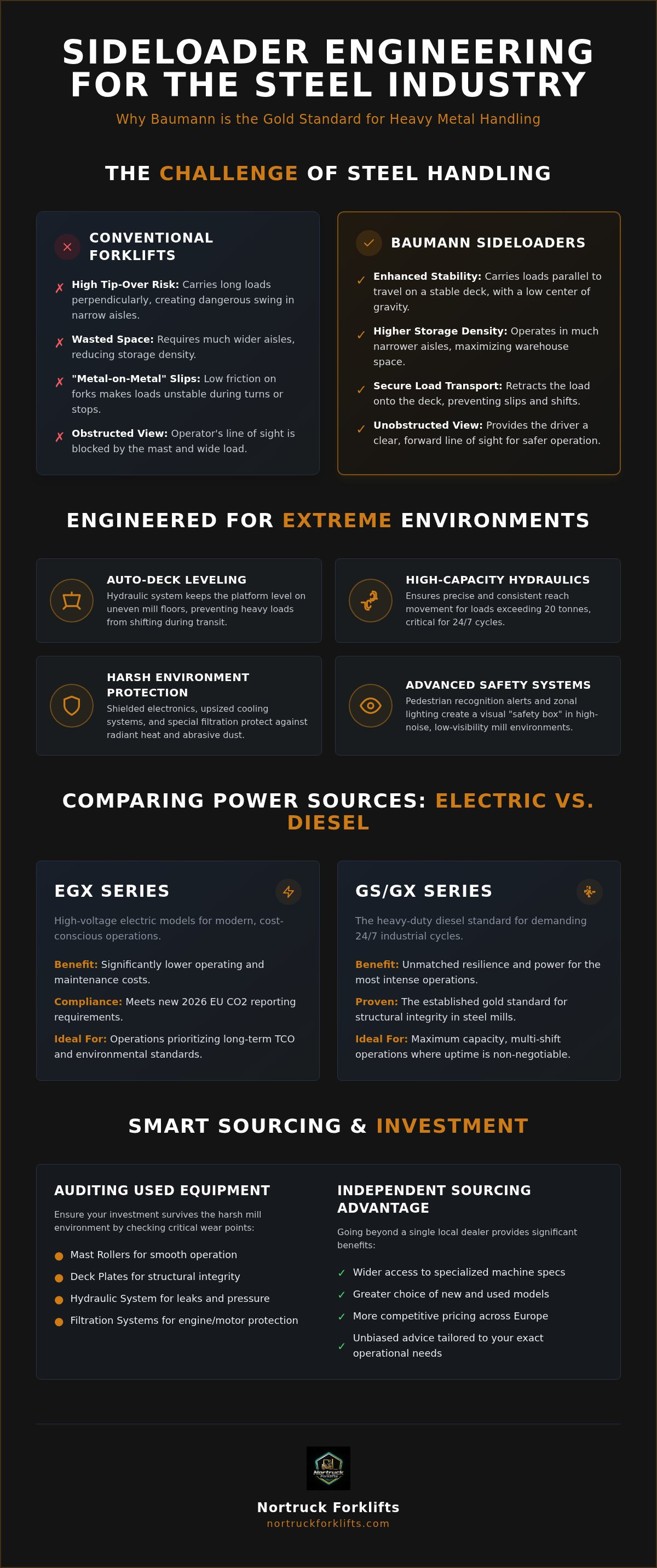
Standard material handling often fails when faced with the unique geometry of raw steel. While a generic powered industrial truck excels at moving palletized goods, it struggles with the physics of a twelve-meter I-beam. The "metal-on-metal" challenge is a primary concern for mill managers. Steel-to-steel contact offers very little friction. On standard forks, a heavy load can easily slide during a sudden stop or a sharp turn. A Baumann sideloader for steel industry use solves this by retracting the load onto a stable, integrated deck. This transition shifts the weight from the tips of the forks to the center of the machine's chassis.
Stability is critical when you're managing loads exceeding ten tonnes. A counterbalance truck must carry wide loads perpendicular to the direction of travel, creating a massive "swing" risk in narrow aisles. This dangerous profile forces mills to maintain wider travel paths, which wastes valuable storage space. In contrast, a sideloader carries the load parallel to its travel direction. This orientation allows for much tighter aisle configurations while keeping the center of gravity low and centered between the axles. It's a more logical way to handle long, heavy materials in a confined space.
The Physics of Long-Load Stability
By carrying the load on the deck, the machine eliminates the need for high-mast travel during transport. You aren't driving with a heavy weight suspended in the air. This design significantly reduces dynamic stress on the chassis and hydraulic systems. It also clears the operator's line of sight. Instead of looking through a thick mast or around a wide beam, the driver has an unobstructed view of the path ahead. This configuration provides a safer way to move long materials without the constant risk of tip-overs or structural fatigue caused by bouncing loads.
Safety Standards in Modern Steel Mills
Modern mills are high-noise, high-activity environments where visibility is often compromised by dust or steam. Integrating a Baumann sideloader for steel industry operations introduces advanced safety layers like pedestrian recognition alerts and zonal lighting. These systems create a visual "safety box" around the machine, warning floor workers of its approach even over the roar of a furnace. Because the load is contained within the machine’s own width, you also see a sharp drop in product-to-infrastructure damage. You won't be clipping racking or doorway frames with the ends of your beams anymore.
Key Baumann Technical Specifications for Heavy Metal Handling
Baumann's GS series is the standard for high-capacity steel handling. While other machines might lift the weight, few can sustain the structural integrity required for 24/7 mill cycles. A critical feature is the auto-deck leveling system. Mill floors are rarely perfect; they often feature slopes, debris, or expansion joints. This system uses hydraulic cylinders to keep the platform level even when the chassis tilts, ensuring heavy steel plates don't shift during transit. It's a fundamental requirement for a Baumann sideloader for steel industry environments where stability is non-negotiable.
High-capacity hydraulics are equally vital when dealing with 20+ tonne coils. The speed and precision of the reach movement must be consistent, regardless of the load weight. Baumann offers bespoke mast configurations to match specific rack heights, ensuring you don't over-specify or under-utilize your vertical storage. This level of specialized sideloader engineering is what prevents catastrophic failures in high-stress environments. If you are unsure which mast height suits your current warehouse layout, consulting with an independent advisor can clarify your requirements before you commit to a purchase.
Engineering for Extreme Heat and Dust
Steel production creates an environment defined by radiant heat and abrasive particulates. Baumann protects sensitive electrical systems by housing them in shielded compartments away from direct heat sources. Hydraulic cooling systems are upsized to maintain optimal fluid viscosity during multi-shift operations. Special filtration systems are also integrated to prevent metallic dust from entering the engine or motor intakes; this is a common cause of premature wear in standard forklifts. These features ensure the Baumann sideloader for steel industry use remains operational while other machines are sidelined for repairs.
The GS Range: Heavy-Duty Performance
The GS range covers load capacities from 10 to 50 tonnes, making it suitable for everything from billet handling to massive coil transport. These machines feature reinforced frames that resist the torsional stress of uneven loading. The chassis is built with thicker steel plates than standard models to withstand the inevitable bumps and scrapes of a heavy industrial site. The GS series provides the structural rigidity needed to maintain precision and safety during the most demanding high-cycle steel handling tasks.
Comparing Power Sources: Electric vs. Diesel Sideloaders in Steel Mills
The choice between diesel and electric power used to be a simple trade-off between raw strength and indoor air quality. That's no longer the case. Selecting a Baumann sideloader for steel industry tasks now requires a nuanced look at your facility's infrastructure and long-term energy strategy. Modern electric models, specifically the high-voltage EGX range, now match the lifting capacity of their diesel counterparts while offering a significantly lower total cost of ownership. In the abrasive environment of a steel mill, the simplicity of an electric drivetrain is a major operational advantage.
Maintenance is where the two power sources diverge most sharply. A diesel engine in a dusty mill requires constant attention to air filtration, oil quality, and exhaust after-treatment systems. Metallic dust is particularly hard on internal combustion components. Conversely, electric motors are largely sealed units with fewer moving parts. This reduced complexity leads to higher uptime in high-cycle 24/7 environments. While the initial capital investment for electric units is higher, the savings on fuel and reduced service intervals often justify the shift for most modern steel service centers.
The Rise of High-Capacity Electric Sideloaders
The ELX and EGX series have redefined what electric machines can do. These models utilize 120v power supplies to provide 9 to 10 hours of run time, which is enough to cover a standard shift even under heavy load conditions. Beyond the lack of emissions, the noise reduction is a massive benefit for indoor safety. Operators can hear pedestrian alerts and verbal instructions more clearly, reducing the risk of accidents in crowded loading bays. These machines ensure zero-emission compliance, which is increasingly important as industrial regulations tighten across Europe.
Diesel Reliability for Outdoor Storage Yards
Diesel remains a logical choice for large, uncovered storage yards where charging infrastructure is difficult to install. The GX and GS diesel series offer exceptional cold-start performance, which is a critical factor for mills in northern European climates. If your facility requires machines to operate in remote sections far from the main power grid, the logistics of a quick refueling stop are often more practical than a battery swap or a long charging cycle. Diesel still provides the most straightforward solution for heavy-duty outdoor logistics where the power-to-weight ratio is tested by the heaviest steel sections.
Sourcing Used Baumann Sideloaders: Resilience in Harsh Environments
Sourcing a pre-owned Baumann sideloader for steel industry applications is a strategic way to acquire premium machinery without the lead times of a new build. However, the secondary market for mill-grade equipment is complex. You're looking for a machine that has survived high-cycle stress and extreme temperatures. A thorough technical audit is the only way to distinguish a reliable workhorse from a liability. You need to look beyond a fresh coat of paint to understand the true mechanical health of the chassis and hydraulics.
Common wear points include the mast rollers and the deck plates. In steel handling, deck plates are often scarred or warped from the impact of heavy billets or plates. Hydraulic systems in these machines are designed for longevity, but they aren't invincible. You should evaluate the remaining life of specialized hydraulic cylinders and pumps by reviewing duty cycle data and pressure test results. At Nortruck, used Baumann sideloader verification is a core part of our advisory process. We provide an independent perspective that ensures the machine’s lifting capacity hasn't been degraded by years of grueling metal handling.
The Steel Mill Inspection Checklist
Steel mills put immense torsional stress on a chassis. You must inspect the load deck and main frame for hairline structural cracks, especially near the mast mounting points and axle hangers. Specialized attachments, such as heavy-duty fork positioners or coil booms, should be checked for deformation or weld fatigue. Inspect hydraulic seals for heat-related brittleness, as constant exposure to radiant heat can turn flexible seals into hardened components prone to sudden failure. These details are often overlooked in general equipment auctions but are critical for mill safety.
Value Preservation and Resale
Baumann machines consistently hold their value better than generic sideloaders. This resilience stems from their heavy-duty engineering and the robust European parts network that supports older models. A documented maintenance program is the most significant factor in preserving this value. Prospective buyers in the steel industry prioritize operational certainty over initial savings. They're looking for a machine with a clear service history that proves it hasn't been neglected during multi-shift industrial cycles. For a more comprehensive look at evaluating high-capacity trucks across different brands, see our Used Heavy Lifting Equipment Inspection Checklist.
Expert Advisory: Sourcing Your Baumann Sideloader Across Europe
Sourcing a Baumann sideloader for steel industry needs involves more than just picking a model from a brochure. The European market offers a vast inventory of both new and used equipment, but finding the exact specification for a high-stress mill environment requires specialized knowledge. An independent forklift advisor provides a critical advantage by focusing on technical suitability rather than meeting a specific manufacturer's sales quota. This transparency is vital when you're investing in machinery that must perform for decades.
Navigating the logistics of importing 30-tonne machines across European borders isn't a task for the inexperienced. It requires coordination with specialized heavy-haulage providers and a deep understanding of regional compliance standards. By looking beyond your local territory, you gain access to a wider variety of mast heights, deck configurations, and power options that might not be available domestically. This broader search is often the only way to find a machine that matches your mill's specific narrow-aisle constraints.
Why Experience Matters in Heavy Lifting
Lars G Tarby’s background, spanning over 40 years, ensures that every recommendation is grounded in practical mill reality. In the steel industry, the gap between a salesperson and a consultant is measured in uptime. A consultant understands how radiant heat affects hydraulic longevity and why a specific GS model's chassis reinforcement is necessary for your slab-handling layout. For example, we've previously assisted major European mills in sourcing specialized GS units with custom auto-leveling specs that were simply unavailable through their primary local channels. This level of technical insight prevents costly procurement errors.
Streamlining the Sourcing Process
The Nortruck process begins with a comprehensive operational audit to define your specific lifting requirements. We then tap into our established network across Europe to find the right machine, often reducing the long lead times associated with new factory orders by identifying high-quality used units. This methodical approach ensures the equipment is verified, transported, and ready for integration into your 24/7 industrial cycle. We handle the complexities of the European market so you can focus on your production targets.
Securing Your Mill's Operational Future
Selecting the right Baumann sideloader for steel industry operations is a decision that impacts your facility's safety and storage density for decades. You've seen how specialized engineering, like auto-deck leveling and heat-shielded hydraulics, protects both your personnel and your investment in 2026's demanding industrial climate. Whether you're transitioning to high-voltage electric power or maintaining a diesel fleet for remote yard work, technical suitability must always come before brand loyalty.
Navigating the European market for these machines requires an "insider" perspective. With over 40 years of industrial lifting expertise, Nortruck provides the independent sourcing you need to find exact specifications across major manufacturers. We understand the nuances of the steel and timber industries; our goal is to ensure you get a machine that survives 24/7 heavy industrial cycles without the bias of a single manufacturer.
We're here to help you find the most efficient solution for your specific lifting needs. Let's start a conversation about your mill's next logistics platform and ensure your procurement process is transparent and effective.
Frequently Asked Questions
What is the maximum capacity of a Baumann sideloader for steel?
Baumann offers heavy-duty models with capacities reaching up to 50 tonnes. The GS series is specifically engineered for these high-capacity loads, making it a reliable Baumann sideloader for steel industry applications involving massive coils or structural sections. While most standard mill operations require 10 to 25 tonnes, the ability to scale up ensures that even the heaviest primary production materials are handled with stability and precision. It's about matching the chassis to the specific lifting cycle.
Are electric sideloaders powerful enough for the steel industry?
Yes, modern high-voltage electric models like the EGX series match the performance of diesel units for most mill tasks. These machines utilize 120v power systems to handle heavy loads across full shifts. They provide the necessary torque for lifting steel sections while offering zero emissions and reduced noise. For indoor service centers, electric power is often the superior choice due to lower maintenance requirements and improved operator communication. It's a clean, efficient solution for 24/7 cycles.
How much space can I save in my steel warehouse with a sideloader?
Sideloaders can reduce aisle widths by up to 50 percent compared to traditional counterbalance forklifts. Because the machine carries the load parallel to the direction of travel, it doesn't need wide turning circles to navigate with long beams. This narrow-aisle capability allows mills to increase their storage density significantly. You can store more inventory in the same footprint while maintaining safe, efficient access to every rack. It's the most effective way to optimize existing warehouse square footage.
What is the typical lifespan of a Baumann sideloader in a steel mill?
A well-maintained Baumann sideloader can remain operational for 15 to 20 years in a heavy industrial environment. Steel mills are particularly harsh, so longevity depends heavily on a documented maintenance program and the protection of hydraulic seals from radiant heat. Machines that undergo regular technical audits and utilize genuine parts often retain high resale value even after a decade of 24/7 multi-shift operation. The durability of the reinforced chassis is a key factor in this long-term resilience.
Is it better to buy a new or used Baumann sideloader for steel handling?
The choice depends on your lead time requirements and budget. New machines offer the latest 2026 CO2 reporting compliance and custom mast configurations. However, sourcing a verified used Baumann sideloader for steel industry use can significantly reduce initial capital expenditure. Nortruck specializes in finding high-quality used units across Europe that have been audited for structural integrity. This provides a reliable alternative to the long wait times of new factory orders while ensuring the machine meets your needs.
What safety features are mandatory for steel-handling sideloaders?
Mandatory safety features include auto-deck leveling to prevent load shifts and pedestrian recognition systems for high-noise areas. Zonal lighting is also critical to define a safe perimeter around the machine during metal transport. In a steel environment, specialized sideloader engineering must also include reinforced cabins and high-visibility masts. These features work together to reduce accident rates and protect infrastructure from damage caused by long, heavy loads. Safety is a non-negotiable aspect of heavy metal logistics.
How does a sideloader handle uneven surfaces in a steel yard?
Baumann units use an advanced hydraulic suspension and auto-leveling system to manage uneven terrain. When the chassis tilts due to a slope or debris, the cylinders adjust to keep the load deck perfectly horizontal. This prevents steel plates or beams from sliding, which is a common risk on standard forks. This stability is essential for maintaining safety when moving 10-tonne loads across outdoor storage yards or aging mill floors. It ensures the load stays secure regardless of the floor condition.
Can Baumann sideloaders be customized for specific steel products like coils?
Yes, these machines are highly customizable with specialized attachments such as coil booms and bespoke fork positioners. You can specify mast heights to match your exact racking dimensions or reinforce the load deck for high-impact billet handling. Independent advisors like Nortruck help you navigate these options to ensure the machine’s technical specifications match your mill's unique operational demands. Customization ensures the equipment handles your specific inventory with the highest level of efficiency and safety.

Article by
Lars Gunnar Tärby
Disclaimer
1. General Information and No AdviceThe information, articles, product descriptions, and specifications provided on this website (www.nortruckforklifts.com) are for general informational and educational purposes only. While we strive to provide accurate and up-to-date content regarding new and used forklifts and heavy machinery, the material published does not constitute professional, technical, or legal advice.
2. Product Specifications and PricingNortruck Forklifts acts as a facilitator for the trade of new and used forklifts. All equipment details, including but not limited to year of manufacture, operating hours, lift capacity, dimensions, conditions, and pricing, are provided based on the information available to us at the time of publication. Specifications and availability are subject to change without prior notice.
3. "As Is" and VerificationAll articles and product listings are provided on an "as is" and "as available" basis without any warranties of any kind, either express or implied. Nortruck Forklifts does not guarantee that the descriptions are entirely error-free, complete, or reliable. Buyers and traders are strongly encouraged to independently verify all technical specifications, machine history, and equipment conditions directly with the seller or an authorized inspector before finalizing any purchase or transaction.
4. Limitation of LiabilityIn no event shall Nortruck Forklifts, its owners, or its contributors be held liable for any direct, indirect, incidental, consequential, or economic loss or damage arising out of the use of, or the inability to use, the information provided on this website, or any transactions facilitated through this platform. This includes, but is not limited to, damages caused by technical inaccuracies, typographical errors, or reliance on the content of our articles.
5. Third-Party LinksOur website may contain links to external websites, dealer networks, or third-party services that are not owned or controlled by Nortruck Forklifts. We have no control over, and assume no responsibility for, the content, privacy policies, or practices of any third-party websites.


