
What if the 150,000 Euro Kalmar reachstacker you just sourced from across the border arrives with a cracked chassis and a non-compliant Declaration of Conformity? In the current market, a single oversight in technical vetting or paperwork can lead to six-figure losses. You likely already know that sourcing high-performance machinery across borders is a logistical minefield. Between the nuances of regional VAT and the language barriers with local dealers, the process is often more stressful than it’s worth without help. Partnering with a specialized heavy equipment broker Europe allows you to bypass these frustrations by putting an expert advocate in your corner who understands both the machinery and the local regulations.
This article shows you how to eliminate the risks of cross-border sourcing to secure high-value machinery that actually performs. We’ll examine why the May 2026 updates to the Declaration of Conformity have changed the stakes for every buyer in the EU. You’ll also learn how transparent technical inspection reports and independent advisory can secure a vetted machine without the usual manufacturer bias. We’ll outline the exact steps needed to ensure a seamless delivery of your next Linde, Toyota, or Baumann unit directly to your facility.
Key Takeaways
- Understand why an independent advisor is essential for navigating the 2026 market, moving beyond simple transactions to provide deep technical guidance.
- Identify the hidden pitfalls of digital marketplaces, where low listing prices often mask significant refurbishment needs and missing service data.
- Learn how a professional operational audit ensures your new machinery perfectly matches your specific lifting capacity and terminal requirements.
- Discover how a heavy equipment broker Europe utilizes a vast dealer network to source specialized brands like Kalmar and Baumann that are rarely found on public listings.
- Explore how 40 years of industry connections can streamline your cross-border procurement while eliminating the pressure of traditional sales tactics.
What is a Heavy Equipment Broker and Why Europe Needs Them in 2026?
A heavy equipment broker is far more than a middleman. They act as a technical and commercial intermediary, bridging the gap between a buyer’s specific operational requirements and the complex global supply of machinery. While digital marketplaces provide a directory of listings, they often lack the advisory depth needed for high-stakes acquisitions. In 2026, the European market remains fragmented by varying national standards and language barriers. This makes a professional heavy equipment broker Europe essential for buyers who need to verify a machine's true condition before committing capital. It's about moving beyond a simple transaction to find a partner who understands the engineering behind the steel.
Lars G Tarby brings over 40 years of industry experience to this process. This deep tenure allows for the immediate identification of "market noise"—those listings that look perfect on paper but fail to meet technical standards in reality. It’s about knowing which fleets have been maintained and which dealers have a history of transparency. When you're sourcing high-capacity lifting solutions, this insider perspective prevents expensive mistakes that a standard digital search would never catch.
The Evolution of Machinery Sourcing
Sourcing has moved from local dealer visits to a pan-European digital landscape. While this offers more choice, it also increases risk. Buying from a photo is the biggest mistake a buyer can make in 2026. Without a physical, technical inspection, you’re gambling on the integrity of hydraulic systems or the structural health of a chassis. We see a clear shift toward specialized consultancy. Companies now prioritize expert vetting over the convenience of a quick click, especially for mission-critical machinery.
Broker vs. Dealer: Understanding the Distinction
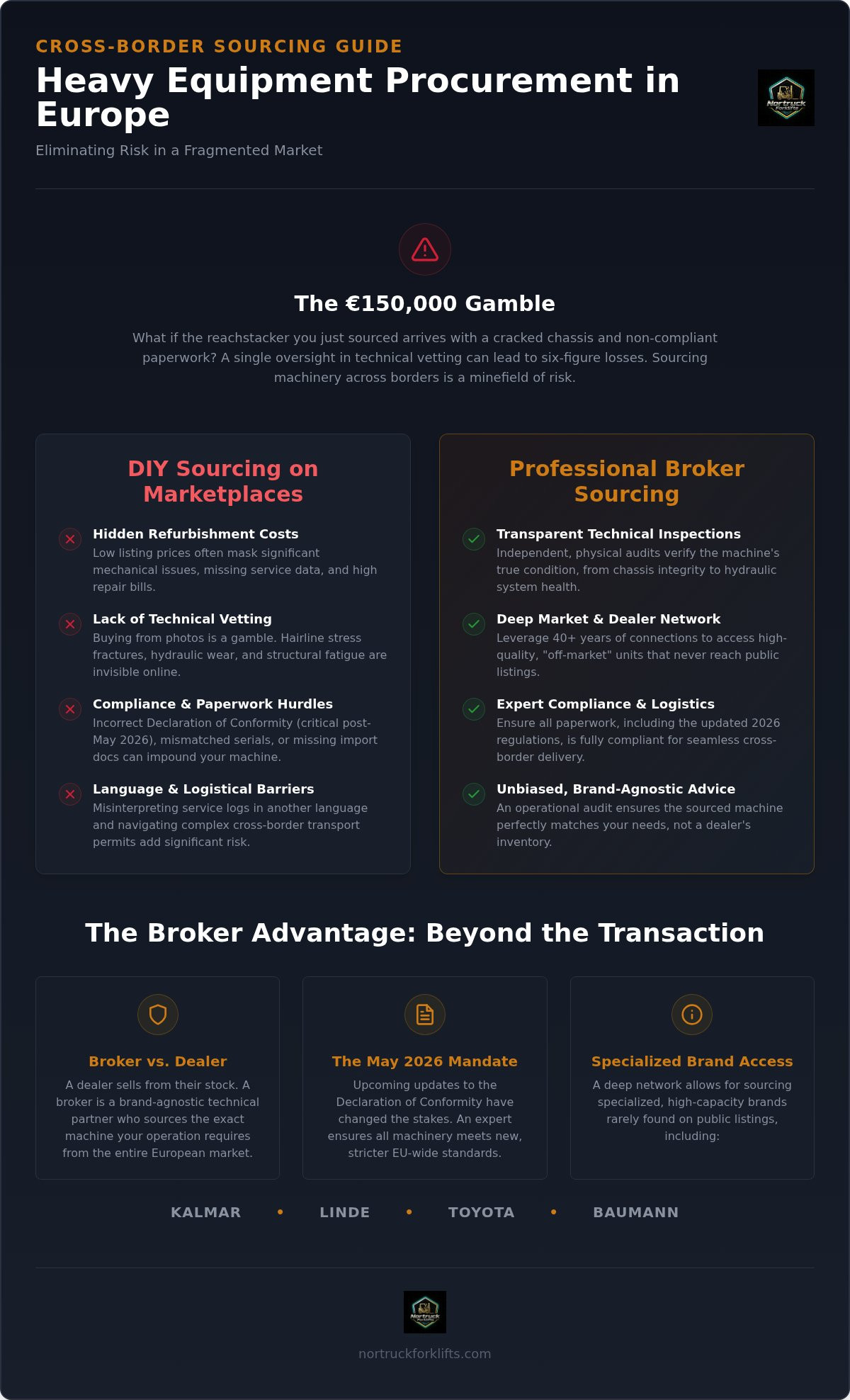
It’s a common misconception that brokers and dealers perform the same function. A dealer’s primary goal is to move the inventory sitting in their yard. They are incentivized by their own stock. A heavy equipment broker Europe starts with your operational audit. We source what you actually need, whether that’s a Kalmar heavy lift truck or a Baumann sideloader for specialized timber handling. This brand-agnostic approach ensures operational efficiency over the long term. By leveraging deep networks, a broker can often find "off-market" units that never reach public listings, giving you access to the best machinery before it hits the open market.
The Hidden Risks of DIY Sourcing on European Marketplaces
DIY sourcing on marketplaces is often a race to the bottom on price. Buyers frequently overlook that a low listing price is usually a precursor to high refurbishment costs. These platforms prioritize volume over vetting. While European heavy equipment market trends indicate a robust supply of used machinery, the lack of standardized technical reporting makes every purchase a gamble. Verifying service histories across multiple languages is a significant hurdle. A maintenance log in Italian or French may hide critical gaps that a non-native speaker will miss. It's easy to be swayed by a clean coat of paint, but the technical reality is often different under the hood.
Logistical hurdles add another layer of risk. Transporting a 40-ton reachstacker across three borders requires specialized permits and insurance. If the paperwork is non-compliant, your machine could be impounded at a border crossing. This is where a heavy equipment broker Europe proves their value. They see the red flags a buyer misses, such as mismatched serial numbers or missing import documentation. Their role is to filter out the high-risk listings so you only spend time on viable, high-performance units.
Mechanical Red Flags in Heavy Lifting Units
Structural integrity is the first casualty of poor maintenance. In high-capacity Kalmar units, we look for hairline stress fractures in the mast or carriage. These aren't always visible in marketplace photos. Hydraulic system health is another concern. In older reachstackers, internal pump wear can lead to total system failure shortly after delivery. The term "refurbished" is subjective across Europe. In some regions, it means a full engine overhaul; in others, it’s merely a fresh coat of paint. Understanding these regional nuances is vital to avoid overpaying for a machine that needs immediate repairs.
Commercial and Legal Compliance
Navigating VAT and import duties requires precision. The European regulatory environment is shifting, particularly with the May 29, 2026, deadline for updated Declarations of Conformity under Regulation (EU) 2024/2748. Ensuring that CE certification is genuine and up to date is critical for every unit. For a deeper look at these opportunities, read about The Strategic Benefits of Sourcing Used Forklifts from Europe. If you're unsure about the technical health of a listing, consulting with an independent advisor can prevent a costly procurement error.
The Professional Sourcing Process: How a Broker Finds Value
While many manufacturers suggest you simply "configure" a machine online, a professional sourcing strategy focuses on the Total Cost of Ownership (TCO). A heavy equipment broker Europe approaches procurement through a methodical four-step process designed to uncover value that isn't visible on a standard spec sheet. We begin with an operational audit to define your exact lifting requirements, followed by a pan-European search across dealer networks and private fleets. This is followed by rigorous technical vetting and physical inspection before moving to negotiation and contract finalization. This structured approach ensures that every acquisition is based on data rather than hope.
Defining the Requirement: Beyond Basic Specs
An operational audit isn't just about weight capacity; it's about understanding your specific duty cycles and site environment. Are you moving toward electric power for urban Low Emission Zones, or does your high-intensity shift pattern still require Stage V diesel engines? Space constraints also play a major role. In facilities with extreme layout limitations, a Combi-Lift 4-way truck is often the only solution to maintain throughput. For a deeper dive into current trends, see our European Forklift Market Guide 2026.
Once the requirement is clear, the search extends across pan-European networks. This stage is where many DIY buyers encounter significant risks in equipment sourcing due to a lack of supply chain visibility. A broker bypasses the market noise to locate units with verifiable histories that have not yet been listed on public marketplaces.
Inspection and Verification Standards
The third step is the most critical: technical vetting and physical inspection. We don't rely on the seller's word or a digital logbook. Technical vetting is the core of investment security. Our standards include independent oil analysis to detect internal engine or transmission wear and hydraulic pressure tests to ensure the system meets original manufacturer specifications. We also verify "hours on the clock" against actual wear on critical components like mast rollers and steer axles.
It’s common to find machines where the hour meter doesn't match the mechanical reality. By identifying these discrepancies early, we either walk away or use the data as leverage during negotiation. Contract finalization ensures your capital is protected by clear terms on delivery and compliance, moving the risk away from your balance sheet and into a professional framework.
Brand Specialization: Why Expert Knowledge Matters
Brand specialization is the primary differentiator between a generalist directory and a professional heavy equipment broker Europe. High-capacity machinery isn't a commodity; it's a complex assembly of specialized engineering. When you're investing in a 40-tonne unit, you aren't just buying steel. You're buying the maintenance history of a specific drivetrain and the structural integrity of a proprietary mast design. An expert broker understands these nuances and can identify which brands excel in specific industrial environments. This deep-seated knowledge ensures that the machine you procure is fit for your specific operational purpose.
Sourcing Kalmar and High-Capacity Logistics
Kalmar heavy lift trucks are the gold standard for port terminals and heavy industrial sites, but they present unique engineering challenges. The drivetrains in these units face immense torque and heat cycles. We prioritize inspecting common wear points in the transmission and steer axles that general inspectors often overlook. Securing a used unit also requires a strategy for ongoing maintenance support. For more details on these high-capacity assets, see our guide on Sourcing Kalmar Heavy Lift Trucks for Sale.
Specialized Handling: Baumann and Combi-Lift
Specialized machines like Baumann sideloaders require a specialized broker. These units are essential for handling long loads like timber and steel, where standard forklifts lack the stability or reach. The European market for used sideloaders is niche, making it difficult to find value without direct industry connections. Similarly, multidirectional sourcing for a Combi-Lift 4-way truck for sale demands an advisor who understands how these machines optimize warehouse space. We help you navigate these specialized markets to find the best value across private fleets.
Choosing between Linde and Toyota for counterbalance applications often comes down to shift intensity. Linde’s hydrostatic drive offers precision for high-cycle environments, while Toyota is frequently favored for its straightforward mechanical reliability in standard industrial use. We help you weigh these benefits against your specific duty cycles to ensure long-term operational efficiency.
Reachstackers for port terminals require the highest level of due diligence. These machines operate in corrosive environments and face extreme structural stress. A broker’s role is to verify that every safety system, from the twistlock sensors to the load moment indicators, is fully functional and compliant with 2026 standards. This level of scrutiny prevents the acquisition of a machine that would otherwise fail a terminal's safety audit.
Partnering with Nortruck Forklifts for European Sourcing
Partnering with Nortruck Forklifts means leveraging 40 years of direct industry connections. This deep tenure is the foundation of the Nortruck Advantage. When you engage a heavy equipment broker Europe, you're looking for more than just a list of available machines. You need an expert who can bypass standard dealer markups and find high-performance units from private fleets that never reach the public market. Our approach is built on long-term partnerships rather than quick transactions, which naturally removes the traditional sales pressure from your procurement process. We don't sell what's on a lot; we source what your operation requires.
We recently managed the acquisition of a 30-tonne lift unit for a client that required transport across three European borders. This wasn't just a matter of shipping. It involved navigating regional VAT differences and ensuring the machine’s technical certification was valid for the destination country. By handling the logistical and regulatory complexities, we ensured the machine arrived on-site ready for immediate operation. This case study reflects our commitment to solving the hidden problems of cross-border sourcing before they impact your balance sheet.
Transparency in the Advisory Process
Our advisory model is designed to provide total clarity from the start. We provide detailed technical reporting and a clear breakdown of fees so there are zero surprises at the end of the transaction. Lars G Tarby acts as your personal advocate in the market, utilizing his experience to challenge seller claims and verify the true condition of every machine. For companies looking for a structured approach to fleet expansion, our Heavy Machinery Procurement Services offer a reliable path to securing high-value assets without the usual risks.
Next Steps for Your 2026 Fleet Expansion
The process begins with a technical discovery call. This is where we conduct an operational audit to understand your lifting requirements, duty cycles, and specific site constraints. Once we define your sourcing timeline and budget parameters, we activate our European network to find the right match. We invite you to leverage our experience for your next lift truck acquisition. Whether you need a Kalmar reachstacker or a specialized Baumann sideloader, we're ready to help you navigate the European market with professional confidence.
Securing Your Fleet’s Future in 2026
Sourcing heavy machinery across borders shouldn't be a gamble based on a digital listing. We've explored how the 2026 regulatory environment and the nuances of high-capacity engineering make professional vetting essential. By moving away from the sales pressure of traditional dealers and focusing on an independent, operational audit, you ensure your next asset is a performance driver rather than a maintenance liability. A dedicated heavy equipment broker Europe acts as your advocate, bridging the gap between fragmented local markets and your specific facility requirements.
With 40 years of industry experience, we focus on the technical reality of Kalmar, Linde, and Baumann units. Our transparent advisory process eliminates the risks of hidden defects and logistical errors, delivering a vetted machine directly to your terminal. It's time to prioritize precision in your procurement strategy. We understand the internal nuances of the industry and value long-term solutions over quick transactions.
We're ready to help you navigate the complexities of the European market with professional confidence and integrity.
Frequently Asked Questions
What does a heavy equipment broker actually do?
A broker acts as your technical and commercial advocate in the market. Instead of selling from a fixed inventory, they conduct a pan-European search based on your specific lifting requirements. They handle everything from the initial operational audit to the final contract negotiation. This ensures you aren't just buying what's available, but what's actually suitable for your fleet's long-term performance.
How much does it cost to use a machinery broker in Europe?
Fees are generally based on the complexity of the sourcing project and the value of the machinery. While some brokers use a commission-based model, others prefer a flat advisory fee for technical vetting. Most clients find that the broker's ability to negotiate lower prices and avoid machines with hidden defects pays for the service itself. We discuss all costs transparently during our first consultation.
Can a broker help with the transport of a 40-tonne forklift?
Managing the logistics for a 40-tonne forklift is a standard part of our sourcing process. Moving high-capacity units requires specialized low-loader transport and specific road permits that vary by country. We coordinate with experienced heavy-haulage partners to manage the entire journey. This includes handling the necessary insurance and cross-border paperwork to ensure your reachstacker or lift truck arrives without any legal or logistical complications.
Is it better to buy a new machine or a used one via a broker?
The choice depends on your specific application and capital budget. New equipment provides the latest emission standards and manufacturer warranties, which is ideal for high-intensity, multi-shift operations. However, a high-quality used unit sourced through a heavy equipment broker Europe can offer significant savings for less demanding duty cycles. We provide a brand-agnostic analysis to help you decide which path offers the best return on investment for your facility.
How do you verify the condition of a machine in another country?
We never rely on seller-provided photos or digital logs. Verification involves a physical inspection by a technical expert who understands the specific wear points of heavy machinery. This includes performing hydraulic pressure tests and structural checks on masts and carriages. We also use independent oil analysis to detect internal engine or transmission wear. These steps provide a transparent technical report that confirms the machine's true condition.
What brands does Nortruck Forklifts specialize in sourcing?
Our primary expertise is in high-capacity and specialized lifting equipment. We specialize in sourcing Kalmar heavy lift trucks, reachstackers, and Baumann sideloaders. Our network also provides access to Combi-Lift 4-way trucks and counterbalance forklifts from Linde and Toyota. For industrial and port applications, we also source Volvo wheel loaders. We focus on brands known for engineering excellence and long-term operational reliability.
What happens if a machine has hidden defects after purchase?
Our technical vetting process is designed to prevent this exact situation. By conducting deep mechanical inspections and verifying service histories before purchase, we filter out units with high-risk profiles. If a machine shows signs of structural stress or hydraulic failure during our inspection, we walk away from the deal. Our goal is to ensure you receive a machine that is ready for immediate, high-performance work.
How long does the sourcing process usually take?
A typical sourcing project takes between two and six weeks. Standard counterbalance units are often located and vetted quickly. However, finding specialized machinery like a Baumann sideloader with specific carriage dimensions or a high-capacity Kalmar truck can take longer. We provide a realistic timeline after our initial discovery call. This ensures your procurement plan aligns with your operational deadlines and fleet expansion goals.

Article by
Lars Gunnar Tärby
Disclaimer
1. General Information and No AdviceThe information, articles, product descriptions, and specifications provided on this website (www.nortruckforklifts.com) are for general informational and educational purposes only. While we strive to provide accurate and up-to-date content regarding new and used forklifts and heavy machinery, the material published does not constitute professional, technical, or legal advice.
2. Product Specifications and PricingNortruck Forklifts acts as a facilitator for the trade of new and used forklifts. All equipment details, including but not limited to year of manufacture, operating hours, lift capacity, dimensions, conditions, and pricing, are provided based on the information available to us at the time of publication. Specifications and availability are subject to change without prior notice.
3. "As Is" and VerificationAll articles and product listings are provided on an "as is" and "as available" basis without any warranties of any kind, either express or implied. Nortruck Forklifts does not guarantee that the descriptions are entirely error-free, complete, or reliable. Buyers and traders are strongly encouraged to independently verify all technical specifications, machine history, and equipment conditions directly with the seller or an authorized inspector before finalizing any purchase or transaction.
4. Limitation of LiabilityIn no event shall Nortruck Forklifts, its owners, or its contributors be held liable for any direct, indirect, incidental, consequential, or economic loss or damage arising out of the use of, or the inability to use, the information provided on this website, or any transactions facilitated through this platform. This includes, but is not limited to, damages caused by technical inaccuracies, typographical errors, or reliance on the content of our articles.
5. Third-Party LinksOur website may contain links to external websites, dealer networks, or third-party services that are not owned or controlled by Nortruck Forklifts. We have no control over, and assume no responsibility for, the content, privacy policies, or practices of any third-party websites.


