
A used reachstacker for port operations is either your terminal's most strategic asset or its most expensive liability; the difference often comes down to the history you cannot see. You already know that a high-performance Kalmar or Hyster machine offers a cost-effective alternative to buying new, yet the fear of hidden mechanical defects or complex international logistics can make the procurement process feel like a gamble. It's a valid concern when the reliability of your entire container flow rests on a single piece of heavy equipment.
This guide helps you master the complexities of sourcing by focusing on technical evaluation and the true total cost of ownership. We'll look at how to verify maintenance histories across borders and navigate the 2026 regulatory landscape, including the impact of the EU Emissions Trading System and the EU AI Act on terminal operations. By moving beyond simple marketplace listings to a specialized advisory approach, you can secure a machine that meets the 35 to 45 ton capacity demands typical of modern terminals without the risk of unexpected downtime.
Key Takeaways
- Learn why port terminals are prioritizing used equipment in 2026 to bypass long lead times for new machinery while achieving significant CAPEX savings.
- Identify the critical technical specifications for high-intensity container handling, specifically the 45-tonne capacity standards and 5-high or 6-high stacking configurations.
- Discover why machine lineage is the most critical risk factor in calculating the true total cost of ownership for a used reachstacker for port operations.
- Understand the strategic advantages of direct sourcing within the European market to avoid the pitfalls and hidden defects common in online marketplaces.
- Gain insights into how 40 years of industry expertise helps identify high-performing units before they hit public listings.
Why Port Terminals Prioritize Used Reachstackers in 2026
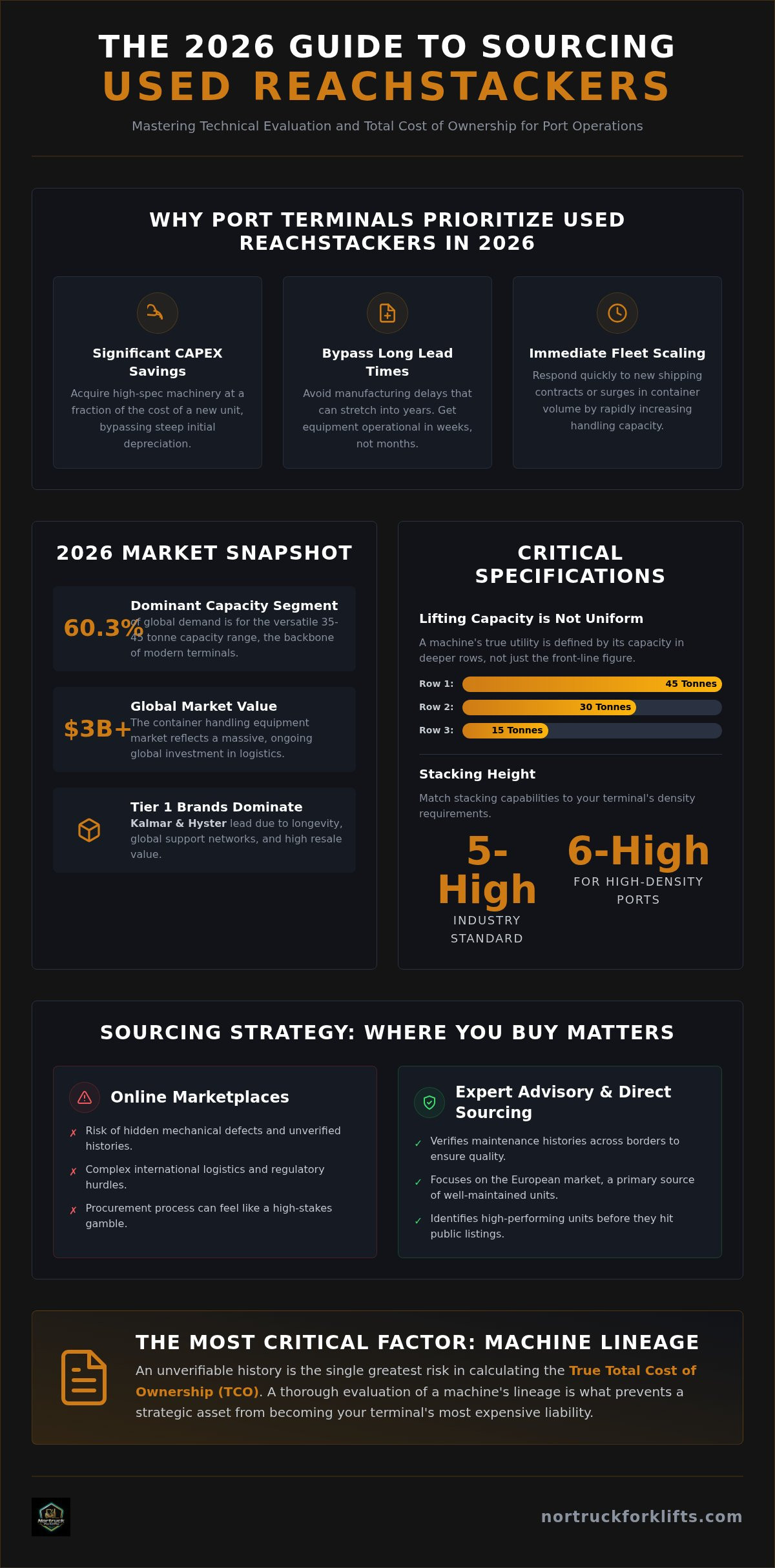
In 2026, terminal operators face a complex procurement environment. While the global market for container handling equipment is valued at over 3 billion dollars, supply chain constraints continue to impact the delivery of factory-fresh units. Choosing a used reachstacker for port operations is no longer just a budget-conscious move; it's a strategic necessity for maintaining operational readiness. Before analyzing the market trends, it's helpful to understand what is a reach stacker and why its ability to stack laden containers up to six rows deep makes it the backbone of modern intermodal hubs.
To better understand how these machines maintain terminal efficiency, watch this demonstration of modern container handling:
Brand loyalty remains a significant driver in the 2026 resale market. Manufacturers like Kalmar and Hyster dominate the landscape because their machines are built for longevity and have established global support networks. When you invest in these brands, you're buying into a secondary market where parts are accessible and technicians are already trained on the systems. This familiarity directly translates to higher resale value and lower training costs for your terminal staff. In a market where the 35 to 45 ton capacity segment accounts for over 60% of total demand, sticking with proven Tier 1 machinery ensures your fleet remains versatile and liquid.
The Economic Case for Pre-Owned Equipment
The financial logic for choosing used machinery centers on the steep depreciation curves of heavy container handlers. A new unit loses a significant portion of its value in the first few years of operation. By targeting well-maintained units that have already moved past this initial drop, terminals can acquire high-spec machinery at a much lower capital expenditure. This allows for faster fleet scaling. Instead of waiting for a single new machine, a port might secure two high-quality used units for a similar investment, doubling their handling capacity. Remanufactured units also provide an excellent middle ground, offering extended life cycles and updated components for a fraction of the cost of a 2026 model.
Availability and Lead Time Advantages
Manufacturing delays in the global heavy lifting sector mean that ordering new can result in wait times that stretch into years. For a port experiencing sudden growth, these delays are unacceptable. Sourcing a used reachstacker for port use offers an immediate solution to capacity bottlenecks. Major European hubs currently serve as the primary source for this equipment, as they frequently rotate their fleets to stay compliant with the latest environmental standards. These units are often available for immediate inspection and transport, allowing you to have a machine operational on your terminal in weeks rather than months. This speed is a critical advantage when responding to new shipping contracts or seasonal surges in container volume.
Key Specifications for High-Performance Container Handling
Selecting a used reachstacker for port operations requires a deep dive into technical specifications that go beyond the manufacture year. In 2026, the 35 to 45 ton capacity segment continues to dominate the market, accounting for approximately 60.3% of global demand. This dominance exists because these machines provide the necessary ballast to handle fully laden containers safely. It's not just about the peak lifting capacity, however; you must evaluate how that power translates to your specific terminal layout and stacking requirements.
Understanding Load and Stacking Capacity
Load charts are the most critical document you'll review during procurement. While a machine is often marketed by its first-row capacity, the second and third-row figures determine its true utility in a crowded yard. A standard 45-tonne unit might only manage 30 tonnes in the second row and 15 tonnes in the third. If your terminal relies on deep stacking, these numbers are non-negotiable. Stacking height is equally vital. While 5-high stacking is the industry standard, high-density ports are increasingly sourcing 6-high configurations to maximize vertical space. Compliance with container handling safety regulations ensures that these lifting operations remain within legal and operational limits, protecting both your personnel and your equipment investment.
Wheelbase and turning radius also dictate efficiency. A shorter wheelbase offers better maneuverability in narrow aisles but can compromise stability at full extension. Conversely, a longer wheelbase provides a smoother ride and better weight distribution. For terminals with tight footprints, finding the balance between footprint and lifting arc is the key to maintaining a high cycle rate. If you aren't sure which configuration fits your yard, we can help you evaluate specific machinery based on your terminal's unique layout.
Brand-Specific Technical Advantages
The Kalmar DRG series, often called the "Gloria" generation, remains a benchmark in the used market. Its popularity stems from the K-Motion drive train and an intuitive G-Generation cabin that reduces operator fatigue. These units are known for their sophisticated electronic control systems, which provide precise data on fuel consumption and mechanical stress. In contrast, Hyster and Konecranes are frequently praised for their robust hydraulic systems. These machines often feel more "mechanical" to operators, which can be an advantage in regions where specialized electronic repair services are limited.
Linde and Toyota machines are prized for their reliability in high-cycle port applications. Their engineering focus often leans toward simplified maintenance access and durable engine components. Despite the rise of electric models, Internal Combustion Engine (ICE) units still hold a 71.7% market share in 2026. This is largely due to their proven performance in continuous, multi-shift operations where charging infrastructure isn't yet mature. When sourcing, prioritize units with verifiable service logs that show regular hydraulic oil changes and structural inspections of the spreader and boom.
Evaluating Total Cost of Ownership (TCO) and Machine Lineage
The purchase price of a used reachstacker for port use is only the first entry in a long-term financial ledger. To find the true value of an asset, you must calculate the Total Cost of Ownership (TCO). This calculation includes fuel consumption, scheduled maintenance, and the potential for unplanned downtime. In 2026, operational efficiency is also tied to environmental standards. Following EPA best practices for cargo handling equipment isn't just a matter of regulatory compliance; it's a proven method for reducing fuel overhead and extending the service life of your fleet.
Machine lineage is the most reliable predictor of future performance. A unit that spent its life in a dry, inland terminal will have a completely different wear profile than one operating in a coastal environment. Saltwater corrosion is a silent threat to both structural integrity and sensitive electronics. It can compromise boom welds or spreader twistlocks long before damage is visible to the untrained eye. Future-proofing your fleet also requires confirming that older Kalmar or Volvo models still have a robust supply chain for spare parts. If a specific model's components are becoming scarce, the TCO spikes because every repair leads to extended operational delays.
The Inspection Framework for Port Equipment
A thorough technical evaluation prevents expensive surprises after the machine arrives at your terminal. You should prioritize checking for spreader wear, hydraulic leaks, and microscopic boom cracks. These are high-stress areas where repair costs can quickly exceed the machine's market value. Engine hours provide a baseline, but they don't reveal the intensity of previous operations. Five thousand hours of light empty-container handling is far less taxing than the same time spent on heavy laden-container cycles in a high-throughput hub. For a detailed breakdown of what to look for, refer to our used reachstacker inspection checklist to guide your technical team through the evaluation.
Maintenance History and Documentation
Verified service logs are the gold standard for transparency in the used market. In 2026, a machine without a clear documentation trail is a liability you can't afford. We look for "red flag" environments, such as high-dust facilities or extreme temperature regions, which accelerate the degradation of hydraulic fluids and seals. At Nortruck Forklifts, we verify machine history across European borders by dealing directly with original owners. This direct sourcing eliminates intermediaries who might obscure a unit's true operational history. By confirming that a machine has followed its manufacturer's recommended service intervals, we ensure it remains a reliable, high-performance asset for your port terminal.
How to Source Quality Reachstackers Across the European Market
Europe remains the most fertile ground for sourcing a used reachstacker for port terminals. This isn't just about volume; it's about the quality of the maintenance culture. Major logistics hubs in Europe frequently upgrade their fleets to stay ahead of environmental regulations, meaning high-tier units from brands like Kalmar or Linde enter the secondary market with full service histories. However, browsing an online marketplace isn't the same as a strategic sourcing plan. Many listings lack the technical depth required to identify long-term mechanical risks, leaving buyers to gamble on expensive assets without verified data. Buying sight-unseen from a digital listing is particularly risky when dealing with hydraulics and structural booms that require hands-on verification.
Identifying High-Value Sourcing Hubs
Northern European ports often yield the best-maintained used units. In countries like Germany, the Netherlands, and Scandinavia, equipment is subjected to rigorous safety inspections and climate-controlled maintenance schedules. When you source from these regions, you're buying machinery that has likely operated under strict professional oversight. For a deeper look at regional variations, see our European forklift market guide for regional insights. These hubs are particularly valuable for finding late-model units that already meet the 2026 European emission standards, such as those governing methane and nitrous oxide emissions.
Logistics and Compliance
Transporting a 70-tonne machine across international borders is a significant undertaking. It requires specialized heavy-lift shipping and precise coordination with port authorities. You must also account for local port regulations and safety standards that vary between jurisdictions. Direct sourcing offers a distinct advantage here. By eliminating unnecessary intermediary markups, you can allocate more of your budget toward high-quality transport and thorough pre-shipment inspections. An independent advisor acts as your eyes on the ground, verifying the machine's condition before any contracts are signed. This direct relationship ensures that the used reachstacker for port use you see in the report is exactly what arrives at your terminal. It's about securing a machine that's ready to work from day one, not one that arrives with a list of unexpected repairs.
Expert Advisory: Why Direct Sourcing Beats Marketplace Browsing
Relying on a general marketplace to find a used reachstacker for port use often feels like a passive exercise in compromise. You are limited to what is currently listed, frequently without the benefit of a technical advocate to verify the machine's true condition. Public listings are often the final destination for equipment that has been passed over by industry insiders or terminal operators with first-look access. In contrast, an advisory-led approach prioritizes your specific operational needs over whatever happens to be in stock. This shift from a simple transaction to a specialized consultation ensures that the machine you acquire is actually capable of meeting your terminal's throughput goals for the long term.
With over 40 years of experience in the heavy lifting industry, Lars G Tarby has built a network that provides access to high-performing units before they ever reach a public website. This insider perspective is vital for identifying machines with clean lineages and verified maintenance records. We don't just look for a machine; we look for the right machine. By dealing directly with fleet owners across Europe, we eliminate the unnecessary intermediaries who add cost without adding value. Nortruck Forklifts' commitment to transparency means technical flaws are discussed openly rather than hidden behind a fresh coat of paint or vague listing descriptions.
The Consultant Advantage
Working with an expert guide means moving beyond the basic specifications of a listing. It involves a deep understanding of how specific brands handle the rigors of port life. For example, specialized knowledge of Kalmar and Volvo machinery allows us to predict maintenance trends and spare parts availability years into the future. This foresight saves you money by avoiding models with known technical bottlenecks or aging electronic systems that are difficult to support. We apply this same rigorous logic across different equipment categories; you can see this in our expert guide to sourcing a used Volvo wheel loader, where we break down the specific evaluation criteria for heavy earthmoving assets. The goal is always to solve a lifting need with a durable solution, not just fill a gap in your yard.
Your Next Steps in Procurement
Initiating a sourcing request with Nortruck Forklifts is a straightforward, professional process. We start with a detailed consultation to understand your terminal's layout, stacking requirements, and budget constraints. From there, we leverage our European network to identify units that match your criteria. You'll receive a transparent advisory report on each machine, including its history and any technical considerations. We're here to act as your advocate throughout the entire procurement cycle, from the initial evaluation to the final delivery at your port. If you're ready to secure a high-performance asset without the risks of the open market, your next step is to reach out for a conversation.
Strategic Fleet Expansion for Modern Terminals
Securing a reliable used reachstacker for port operations in 2026 requires more than a casual search through online listings. It demands a rigorous evaluation of machine lineage, technical specifications, and the long term impact of the Total Cost of Ownership. By prioritizing direct sourcing within European networks, you can bypass the risks of hidden mechanical defects and secure a machine that is ready for high intensity terminal work. This strategy allows your facility to scale capacity immediately while maintaining a clear view of future maintenance requirements.
With over 40 years of industry experience, Lars G Tarby provides the specialized insight needed to identify high performance Kalmar units before they hit the open market. This advisory led approach ensures your equipment meets modern capacity demands and environmental standards without the delays of new manufacturing. You deserve a procurement process built on integrity and direct, honest communication. Let's discuss how a tailored sourcing strategy can strengthen your terminal's operational capacity today.
Taking the right steps now ensures your terminal remains competitive and efficient in the years ahead.
Frequently Asked Questions
Is it better to buy a used Kalmar or Hyster reachstacker for port use?
The choice between these two industry leaders depends on your existing fleet and local service capabilities. Kalmar is often recognized for sophisticated electronic controls and operator ergonomics, while Hyster is frequently praised for its mechanical robustness and simplified hydraulic systems. Both brands maintain excellent resale value. We recommend selecting the brand that your technicians are already comfortable maintaining to ensure the highest possible uptime for your terminal operations.
What are the typical running hours for a reliable used reachstacker?
For high intensity terminal operations, a reliable used reachstacker for port use should ideally have fewer than 15,000 engine hours. Once a machine exceeds 20,000 hours, you should expect more frequent component overhauls, particularly in the transmission and hydraulic pumps. However, a machine with higher hours that has a documented history of light container handling can often be a better value than a low hour unit used for heavy laden cycles.
How does saltwater exposure affect the price of a used reachstacker?
Saltwater exposure typically reduces the market price of a reachstacker because it accelerates structural corrosion and electronic degradation. Machines that have operated in coastal environments require a more rigorous inspection of the boom welds and electrical harnesses. While these units are more affordable upfront, you must weigh the initial savings against the potential for higher long term maintenance costs caused by oxidation in sensitive hydraulic and electronic systems.
Can Nortruck Forklifts source specific reachstacker models from anywhere in Europe?
Yes, we specialize in direct sourcing across the entire European market, focusing on major hubs in Germany, the Netherlands, and Scandinavia. This geographic reach allows us to find specific configurations, such as 6-high stacking units or specialized spreaders, that might not be available in your local region. By dealing directly with fleet owners, we bypass the traditional marketplace and secure high quality machinery that has not been publicly listed yet.
What is the difference between a container handler and a reachstacker?
A container handler uses a vertical mast and is generally limited to lifting containers in the first row. A reachstacker utilizes a telescopic boom, allowing it to stack containers up to three rows deep and reach over obstacles. For most modern port terminals, the reachstacker is the preferred choice because its flexibility significantly increases yard density and allows for more complex logistical maneuvers compared to a standard masted handler.
What are the 2026 emission requirements for used port equipment in Europe?
As of January 1, 2026, the EU Emissions Trading System (ETS) requires shipping companies to surrender allowances for 100% of verified emissions, now including methane and nitrous oxide. For terminal operators, this means prioritizing Stage V compliant engines to future proof their fleets. When selecting a used reachstacker for port operations, we focus on units that help you avoid carbon penalties and meet the increasingly strict air quality standards of major European maritime hubs.
How do I calculate the shipping costs for a 45-tonne reachstacker?
Shipping costs for heavy lift equipment are calculated based on the machine's weight, its physical dimensions, and the specific port to port route. Because these units are oversized, they require specialized Roll on Roll off (Ro-Ro) vessels or heavy lift cargo ships. We help you navigate these logistics by identifying the most efficient transport routes from European sourcing hubs, ensuring that all customs documentation and safety compliance requirements are met before the machine departs.
Should I prioritize engine hours or the year of manufacture?
You should always prioritize engine hours and a verified maintenance history over the machine's age. A 2017 model with 7,000 hours of light duty work is often a much better investment than a 2022 model with 15,000 hours of high stress operation. The year of manufacture is a baseline, but the machine’s lineage and the environment where it previously worked provide the most accurate picture of its remaining service life.

Article by
Lars Gunnar Tärby
Disclaimer
1. General Information and No AdviceThe information, articles, product descriptions, and specifications provided on this website (www.nortruckforklifts.com) are for general informational and educational purposes only. While we strive to provide accurate and up-to-date content regarding new and used forklifts and heavy machinery, the material published does not constitute professional, technical, or legal advice.
2. Product Specifications and PricingNortruck Forklifts acts as a facilitator for the trade of new and used forklifts. All equipment details, including but not limited to year of manufacture, operating hours, lift capacity, dimensions, conditions, and pricing, are provided based on the information available to us at the time of publication. Specifications and availability are subject to change without prior notice.
3. "As Is" and VerificationAll articles and product listings are provided on an "as is" and "as available" basis without any warranties of any kind, either express or implied. Nortruck Forklifts does not guarantee that the descriptions are entirely error-free, complete, or reliable. Buyers and traders are strongly encouraged to independently verify all technical specifications, machine history, and equipment conditions directly with the seller or an authorized inspector before finalizing any purchase or transaction.
4. Limitation of LiabilityIn no event shall Nortruck Forklifts, its owners, or its contributors be held liable for any direct, indirect, incidental, consequential, or economic loss or damage arising out of the use of, or the inability to use, the information provided on this website, or any transactions facilitated through this platform. This includes, but is not limited to, damages caused by technical inaccuracies, typographical errors, or reliance on the content of our articles.
5. Third-Party LinksOur website may contain links to external websites, dealer networks, or third-party services that are not owned or controlled by Nortruck Forklifts. We have no control over, and assume no responsibility for, the content, privacy policies, or practices of any third-party websites.


